
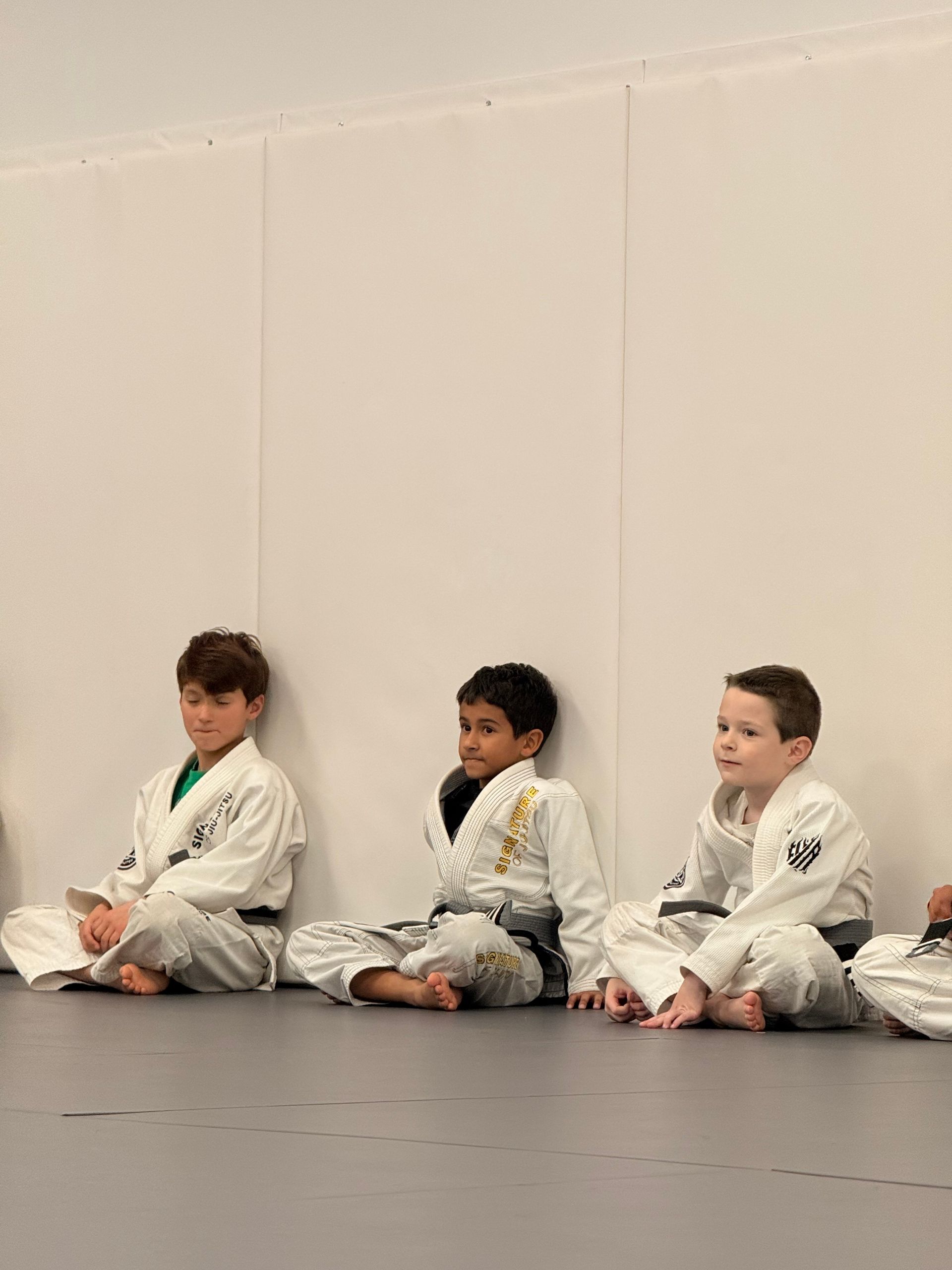
Youth Jiu-Jitsu gives kids a place to move, think, and problem-solve with their whole body.
Belmont families are busy, and most parents are looking for an activity that checks more than one box: fitness, focus, confidence, and a healthy outlet after school. Youth Jiu-Jitsu stands out because it is not just running drills in a straight line or repeating the same motion alone. It is interactive, cooperative, and surprisingly thoughtful.
In our kids program, we treat Brazilian Jiu-Jitsu as a structured learning environment, not as “fighting.” Your child is learning how to control movement, stay calm under pressure, and work with a partner safely. That combination is a big reason Youth Jiu-Jitsu in Belmont has become such a strong fit for families who want real skills and real growth, without the hype.
A lot of the magic happens in small moments: noticing balance, adjusting grips, shifting hips, trying again when something does not work the first time. Those moments add up to better coordination and, in a practical way, more creativity on the mat.
What kids actually do in Youth Jiu-Jitsu class
If you have never watched a kids grappling class up close, it helps to know what the hour usually includes. We keep the structure predictable so kids can relax into learning, while still leaving room for exploration and fun.
Warm-ups that look like movement skills, not boot camp
Kids need warm-ups that match their bodies and attention spans. We use age-appropriate movement that builds athletic basics like balance, posture, and safe falling. It can include animal walks, tumbling patterns, and partner-safe games that reinforce listening and spatial awareness.
The goal is not to “smoke” kids with conditioning. The goal is to help your child feel coordinated and ready to learn technique without rushing.
Technique time: learning positions and concepts
Brazilian Jiu-Jitsu is largely about positions, control, escapes, and transitions. That is true for adults, and we keep it true for kids, just taught in a way that makes sense at younger ages. We break techniques into pieces, show clear details, and coach kids through repetitions with a partner.
Because Youth Jiu-Jitsu is interactive, kids also learn to read what a partner is doing. That is where attention and decision-making start to develop naturally.
Partner drills that teach cooperation
One of the biggest surprises for many parents is how cooperative a good kids class feels. Kids work in pairs, take turns, and learn responsibility for their partner’s safety. That includes learning what “tap” means, stopping immediately when instructed, and using control rather than force.
We also keep a close eye on partner matching. Size, maturity, and experience matter, and we treat that as part of coaching, not an afterthought.
Supervised live practice, introduced progressively
Not every child needs the same pace with contact. In Youth Jiu-Jitsu in Belmont, we introduce sparring or live rounds gradually, with clear rules and a lot of supervision. Beginners often start with positional games and controlled scenarios instead of full open sparring on day one.
This progressive approach matters because it helps kids build confidence through manageable challenges, rather than feeling thrown into something intimidating.
How Youth Jiu-Jitsu develops coordination in a whole-body way
Coordination is not just “being athletic.” It is the ability to control your body, combine movements smoothly, and adjust in real time. Jiu-Jitsu asks kids to coordinate balance, posture, grip, hip movement, pressure, and timing while responding to a partner. That is a lot of information for a young nervous system to organize, and that is exactly why it can be so valuable.
A 2024 review discussed in current youth Jiu-Jitsu coverage reported improvements across several fitness measures for kids training in Ju-Jitsu, including coordination, flexibility, explosive strength, core strength, upper-body strength, and endurance. We keep our promises realistic, but it matches what we often see in day-to-day training: kids move better when they practice movement with purpose.
The “hidden” coordination skills kids practice every class
Youth Jiu-Jitsu builds coordination through specific demands that show up again and again:
• Balance under movement, like staying stable while changing direction
• Bilateral coordination, using both sides of the body instead of relying on a favorite side
• Hip control, which is a big deal in grappling and in general athletic movement
• Spatial awareness, understanding distance and angles with another person close by
• Timing and rhythm, learning when to move instead of trying to muscle through
Over time, kids start to look smoother. They fall more safely, stand up more confidently, and handle contact with more calm and control.
Where creativity comes from on the mat
When we talk about creativity in Youth Jiu-Jitsu, we are not making a clinical promise that training will transform your child into an artist. We mean something practical: jiu-jitsu gives kids repeated chances to experiment with solutions.
Unlike repetitive exercise, partner drills are cognitively interactive. Your child has to notice movement, make a decision, adapt technique, and solve a physical problem in real time. There is no single “right” answer in many situations. There are options, and the best option depends on what the partner is doing.
A simple example of “creative” problem-solving
Imagine your child is learning how to escape from a pinned position. If the partner’s weight shifts higher, one escape might work better. If the partner posts a hand, a different escape might open up. We teach the fundamentals, but kids still have to choose, try, and adjust.
That process is why Youth Jiu-Jitsu in Belmont can feel like a puzzle with movement. Kids learn to think with their bodies, and that kind of learning tends to stick.
Confidence, self-control, and emotional skills that come from manageable challenge
Confidence in martial arts should not come from feeling “tough.” It should come from proof. In class, kids attempt a technique, notice what went wrong, and try again. That cycle builds resilience in a grounded way.
We also emphasize self-control, because control is the point of grappling. Kids learn to apply only the force needed, stop when told, and respect the rules that keep partners safe. Those habits carry over into daily life because kids practice them repeatedly, not because we give a motivational speech and hope it lands.
In Belmont, families often look for an activity that reinforces focus and respect. Our structure supports that:
• Focus: listening for details and following step-by-step sequences
• Resilience: repeating a movement after an unsuccessful attempt
• Self-control: controlling pressure and stopping immediately on command
• Respect: protecting training partners and following gym rules
• Problem-solving: choosing responses when a partner changes position
Those are “life skills,” but we try to make them real by tying them to what happens on the mat each day.
What a safe Youth Jiu-Jitsu program looks like (and what you should expect)
Safety is not just about having mats and saying “be careful.” Safety comes from coaching, rules, supervision, and the way contact is introduced.
The American Academy of Pediatrics advises that children train under instructors who understand age, maturity, size, and experience differences. Noncontact preparation should come before contact training, and dangerous techniques or excessive force should be prohibited. That general guidance lines up with how responsible Youth Jiu-Jitsu should be run: technical first, intensity second.
Our approach to contact: age-appropriate and progressive
Age and maturity determine contact level. Younger kids often need more game-based drilling and simpler goals, while older kids can handle more structured technique and positional sparring. Even within the same age group, we pay attention to temperament and experience so kids do not feel overwhelmed.
Your child should never feel pressured to “prove” anything in the first class. Progress should be earned through consistent practice, not through risky intensity.
Partner matching and instructor supervision
A safe Brazilian Jiu-Jitsu class in Belmont needs active coaching during partner work. That means we watch pairings, adjust as needed, and step in early when intensity rises or technique breaks down. We also build a culture where tapping, stopping, and communicating are normal and respected.
Hygiene and everyday prevention
Kids classes are high-contact, so hygiene is part of safety. We ask families to help with basics like clean training gear, trimmed nails, and covering small cuts. We also keep the mat space clean and set expectations around personal cleanliness and respectful behavior.
Injury awareness and how we respond
Common martial-arts injuries include sprains, strains, dislocations, fractures, and overuse injuries. We coach technique to reduce those risks, and we take any injury seriously.
Concussions deserve special attention. Current pediatric guidance notes there is no evidence that protective headgear prevents concussion in martial-arts participation, which is why coaching and rule enforcement matter so much. If a child shows possible concussion symptoms like headache, dizziness, nausea, confusion, or balance problems, our expectation is simple: stop activity immediately and get medical evaluation before returning. We would always rather be cautious and a little inconvenient than ignore warning signs.
Finding the right class fit for ages 5 to 14
Kids develop fast between kindergarten and early adolescence. A good program recognizes that a 5-year-old and a 14-year-old do not need the same coaching style, even if both are technically “kids.”
Our Youth Jiu-Jitsu offering supports ages 5 to 14, and we build class experiences around what kids can handle physically and emotionally at each stage. Younger students typically need more structure, shorter task cycles, and more reminders about spacing and body control. Older students can take on longer technique sequences, more strategy, and higher responsibility during partner work.
If your child is new to sports or feels “not athletic,” Youth Jiu-Jitsu can still be a great fit. We do not assume prior strength, flexibility, or coordination. We teach those qualities through the curriculum, step by step.
What to expect on your child’s first day
First-day nerves are normal, for kids and parents. We keep the start simple and welcoming, and we explain expectations clearly so your child knows what to do.
Here is a typical first-class walkthrough:
1. Arrive a little early so we can help you get oriented, answer questions, and make your child feel comfortable.
2. Your child joins warm-ups designed to build safe movement and prepare for partner drills.
3. We teach a small set of techniques, focusing on a few details rather than overwhelming kids with too much.
4. Kids practice with a partner under close supervision, taking turns and learning control.
5. We wrap up with a structured ending so kids leave feeling accomplished and clear on what comes next.
After class, we can talk about goals, readiness, and how to choose a training schedule that works with school and family life.
Quick answers to common parent questions
Does Brazilian Jiu-Jitsu involve punching or kicking?
Brazilian Jiu-Jitsu is primarily grappling: positions, balance, escapes, control, and submissions. In Youth Jiu-Jitsu, we keep techniques age-appropriate and focus on safety, control, and fundamentals.
Will my child have to spar on the first day?
Our beginner pathway is progressive. Many kids start with movement games, positional drills, and technique practice before supervised live rounds, depending on age, maturity, and comfort.
What should my child wear?
We will guide you on what is appropriate for class, including training uniform options. In general, plan on clean training gear, no jewelry, trimmed nails, and a water bottle. If your child has a small cut or scrape, cover it securely.
Is Youth Jiu-Jitsu good for a shy child?
It can help a shy child practice participation in a structured setting, but no activity guarantees a personality change. What we can offer is predictable routines, clear expectations, supportive coaching, and partner work that teaches communication and cooperation.
How do you prevent bullying?
We set explicit rules around respectful language, consent, tapping, and stopping immediately. We also supervise partner work closely and address behavior early. On the mat, safety and respect are not optional.
Take the Next Step
If you want an after-school activity that builds real coordination and real problem-solving, Youth Jiu-Jitsu is a strong option, especially when it is taught with structure, care, and age-appropriate progression. Our goal is for your child to learn skills that feel challenging but doable, in a place where safety and respect are built into the routine.
You can see how we run Youth Jiu-Jitsu in Belmont, what the schedule looks like, and how we introduce beginners at Signature of Jiu-Jitsu. When you are ready, we will help you choose a starting point that makes sense for your child’s age, maturity, and comfort level.
Start learning Jiu-Jitsu step by step with training at Signature of Jiu-Jitsu.