
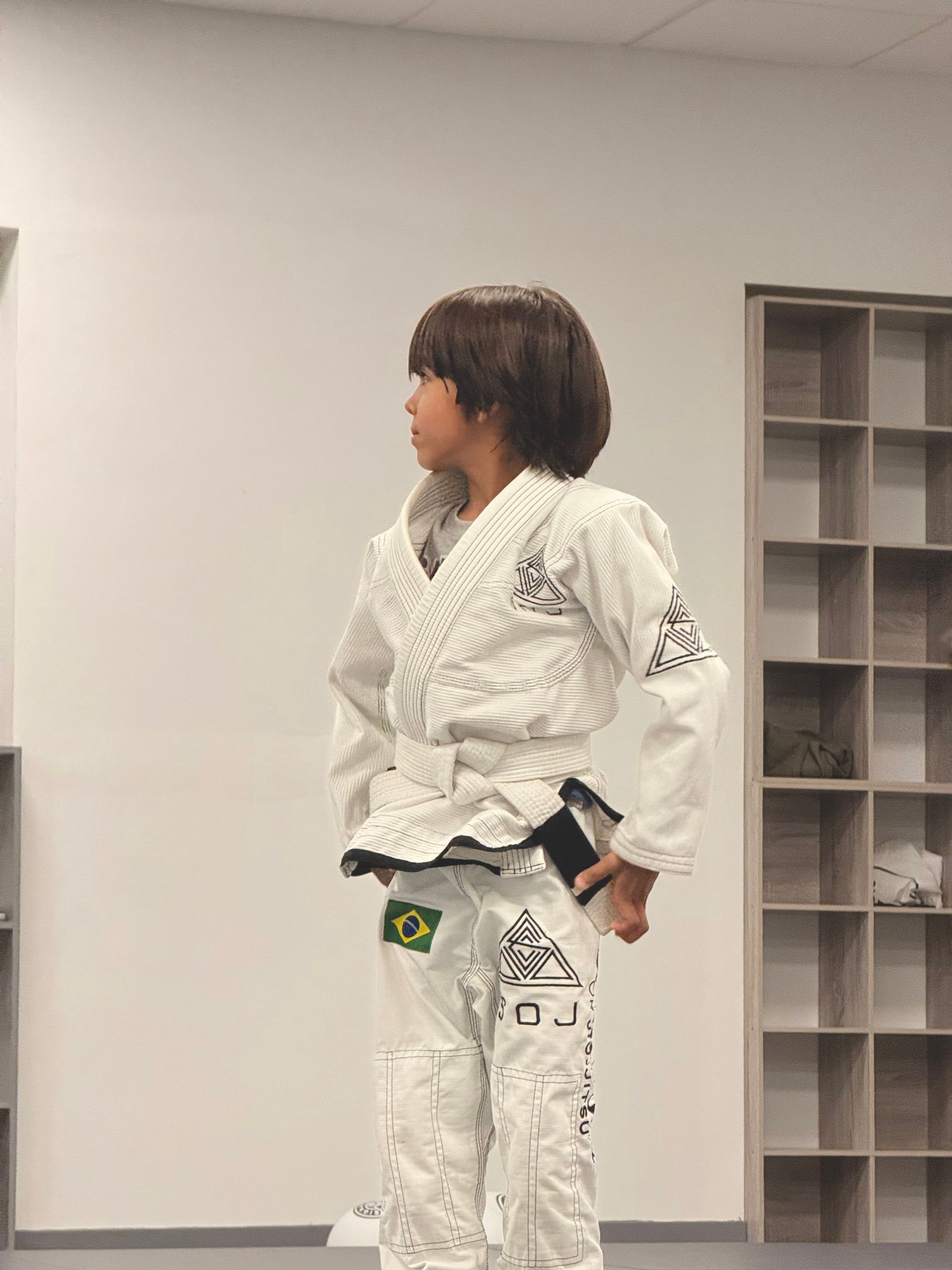
A good youth program does more than teach techniques - it gives kids a steady place to move, reset, and feel capable.
Youth Jiu-Jitsu is often known for self-defense skills, but for many Belmont families, the bigger day-to-day win is simpler: your child gets a healthy outlet after school and a structured way to unwind. When kids are carrying academic pressure, social stress, and a screen-heavy routine, a consistent class can be that “exhale” between school and home.
We also want to be clear about what Youth Jiu-Jitsu is and is not. It can support stress management and overall wellbeing by building routine, movement, problem-solving, and connection. It is not a replacement for mental-health care, and we avoid making promises like “this fixes anxiety.” What we can do is provide a safe, inclusive training environment where kids practice skills that often carry into the rest of life: self-control, persistence, and confidence under pressure.
In other words, if you are looking into Youth Jiu-Jitsu in Belmont because your child seems tense, overwhelmed, or simply needs a better after-school rhythm, you are not alone, and there is a thoughtful way to approach it.
What Youth Jiu-Jitsu is - and what it is not
Youth Jiu-Jitsu is a grappling-based martial art taught through progressive lessons, partner drills, and age-appropriate live practice. Kids learn how to move their bodies, keep balance, and solve physical “puzzles” with technique rather than strength. That puzzle-solving aspect is one reason Jiu-Jitsu in Belmont CA can feel like a fit for kids who do not click with traditional team sports.
At the same time, Youth Jiu-Jitsu is not automatically low-stress. Body contact, sparring, fear of making mistakes, and even the idea of “winning” can feel intense for some kids. That is why coaching matters so much. A supportive youth program builds comfort gradually, sets clear boundaries, and treats emotional safety as part of overall safety.
And one more important boundary: sports can support wellbeing, but sports are not medical care. If your child has persistent anxiety, panic symptoms, trauma-related concerns, depression, or major behavior changes, we encourage you to keep working with a pediatrician or licensed mental-health professional. Training can be a helpful complement, not a replacement.
How exercise supports everyday stress management
One of the most reliable stress supports for kids is physical activity, period. The American Academy of Pediatrics notes that organized sports can support psychosocial development and help children reach the recommended 60 minutes of daily activity when programs are age-appropriate, balanced, and enjoyable. When those pieces are in place, movement becomes a mental reset, not another source of pressure.
Youth Jiu-Jitsu fits well here because class naturally alternates between bursts of effort and moments of listening, learning, and trying again. That rhythm matters. Kids are not just “running hard” for an hour. They are moving, thinking, pausing, and re-engaging. For many students, that pattern is calming in the best way: active, but not chaotic.
In practical terms, an after-school class can help your child transition from school expectations to home life. We see kids arrive with the day on their shoulders and gradually settle in as class becomes familiar: warm-up, skill work, partner practice, then a structured wrap-up. Predictability is underrated, especially for kids who feel like everything changes by the hour.
Why structured problem-solving builds persistence
Stress is not only about having too much to do. It is also about feeling stuck. Youth Jiu-Jitsu repeatedly teaches kids how to get unstuck in small, manageable steps. A position is uncomfortable. A technique does not work at first. A coach offers one adjustment. The student tries again. Improvement shows up in inches, not overnight, and that is the point.
A 2024 qualitative study on Brazilian jiu-jitsu and subjective wellbeing highlighted themes like meaningful goals, healthy habits, and positive social relationships as pathways linked with wellbeing. While much of the research is adult-focused and does not prove cause and effect, the training process itself gives us a reasonable explanation for why people often describe Jiu-Jitsu as mentally helpful: it turns frustration into feedback.
This matters for kids because the stakes stay small. A mistake on the mat is not a grade. It is not permanent. It is a moment to reset and try again. Over time, many students get more comfortable with the idea that effort and adjustment are part of learning, not a sign of failure.
Routine, focus, and breathing: the quiet skills kids practice
Parents sometimes expect the “stress benefit” of Youth Jiu-Jitsu to come from one big moment of confidence. More often, it comes from quiet repetition. Kids learn to listen when excited, slow down when confused, and follow steps in order. Those are focus skills, and they are also emotional regulation skills.
Breathing is part of that, too. We coach kids to keep moving, but also to settle their breathing when a drill feels challenging. The goal is not to make a child stoic or “tough” in a forced way. The goal is to give your child a reliable process for calming down and re-engaging: pause, breathe, reframe, try again.
For some kids, just having permission to take a short break is powerful. When a child feels overwhelmed, a good youth class does not shame them. We can offer a water break, simplify the drill, or let them observe briefly and then return when ready. That flexibility keeps training positive instead of turning it into another pressure cooker.
Social connection: why training partners matter
A big difference between Youth Jiu-Jitsu and many individual activities is that students develop skills through controlled cooperation. Your child cannot learn without a partner who is also trying, also learning, and also respecting boundaries. That social structure creates built-in opportunities to practice communication and consent: “Are you ready?” “Too tight?” “Let’s go lighter.”
This matters because connection is protective. A 2024 national survey of parents found families most commonly associate youth sports with teamwork, friendship, and joy: 88 percent, 82 percent, and 74 percent, respectively. Competition and elite aspirations ranked lower. That aligns with what many Belmont families tell us: you want an activity where your child feels they belong, not an activity that becomes a second job.
Youth Jiu-Jitsu can be a strong fit for kids who do not love loud team dynamics but still want friendships. Partner work is social without being overwhelming. Over time, students start recognizing familiar faces, sharing small wins, and learning how to be a good training partner, which is its own kind of confidence.
Confidence that comes from measurable progress
Confidence is often framed as a personality trait, but in a healthy program it is more like a byproduct of evidence. Your child tries something difficult, improves, and realizes, “I can learn hard things.” That is real confidence. And it tends to feel calmer than the loud, performative kind.
Progress in Youth Jiu-Jitsu is also easier for many kids to understand because the feedback is immediate. Did the grip work? Did the escape create space? Did you remember to tap and reset safely? These are clear markers, and they help students focus on process rather than comparison.
We also keep goal-setting age-appropriate. The goal might be “show up twice a week” or “remember three details from today’s technique.” Those are achievable. Those are controllable. And for a stressed kid, controllable goals are a relief.
Competition should be optional and age-appropriate
Tournaments can be valuable for some families, but competition is not required for wellbeing benefits. In fact, pushing competition too early can add stress, especially if a child is still building comfort with contact, rules, and the learning rhythm of class.
We treat competition as an option, not a requirement. That means students can train recreationally, develop skills, and still receive real coaching and progression. If your child eventually wants to compete, we can guide that path thoughtfully. If your child never wants to compete, that is perfectly fine.
Pediatric guidance also warns that excessive training, overscheduling, and year-round pressure can contribute to burnout. Warning signs can include persistent fatigue, mood changes, and declining performance or enjoyment. We take those signs seriously. A sustainable schedule beats an intense schedule every time, especially for growing bodies and busy school calendars.
Safety, hygiene, recovery, and what “well-run” really means
Stress reduction does not happen if a child feels physically unsafe or constantly worried about getting hurt. Safety is not just “no injuries,” because bumps happen in sports. Safety is thoughtful structure: supervision, clear rules, and training that matches age and maturity.
Here is what we recommend you look for in a Youth Jiu-Jitsu program, especially if your main goal is wellbeing:
• Clear tap-and-release rules that are taught early and reinforced often, so kids know how to stop safely
• Size and experience matching during partner drills, so newer or smaller students are not thrown into mismatched rounds
• Gradual progression into sparring, with alternatives for kids who need more time before live practice
• Clean mats and clear hygiene expectations, because a clean space is part of a low-stress space
• Recovery and rest guidance, including encouragement to balance training with sleep, school, and other activities
• Coaching language that rewards effort, listening, and respect, not intimidation or humiliation
We also encourage families to treat recovery like part of the routine. Bring water. Keep nails trimmed. Wash gear promptly. Aim for consistent sleep. These details are not glamorous, but they make training smoother and help kids feel better week to week.
Questions Belmont parents ask us (and honest answers)
Is Youth Jiu-Jitsu safe for kids?
It can be, when the program is age-appropriate and well supervised. We focus on controlled training, clear rules, and gradual intensity so kids learn skills without being rushed.
Will my child have to spar?
Not immediately, and not in a forced way. We introduce live practice progressively, and we can scale intensity to the student. The goal is learning, not overwhelming.
Is Youth Jiu-Jitsu in Belmont a good fit for shy kids?
Often, yes, because partner work creates structured social interaction. We also allow kids to ease in, ask questions, and build comfort without spotlight pressure.
Will Jiu-Jitsu make my child aggressive?
Well-taught Jiu-Jitsu in Belmont CA emphasizes control, respect, and restraint. The point is not to encourage fighting, but to teach responsibility and boundaries.
Can it help with anxiety, ADHD, or stress?
Exercise, routine, skill-building, and community may support general wellbeing, but Youth Jiu-Jitsu is not a clinical treatment. If you have a diagnosis or serious concern, keep your healthcare team involved and let us know what helps your child thrive in class.
What a first class typically feels like
First classes are a mix of excitement and nerves, and that is normal. We aim to make the environment welcoming without making it a big production. A new student usually starts with simple movements, basic positions, and an introduction to the culture of safety: listening, taking turns, respecting partners, and tapping.
We keep instructions clear and practical. Kids do not need to be athletic to begin. They just need a willingness to try. If your child struggles with coordination at first, that is fine, too. Many students improve quickly simply because they practice foundational movements consistently.
If your child gets overwhelmed, we slow it down. A good Youth Jiu-Jitsu experience is not about pushing through panic. It is about building comfort and capability step by step.
Ready to Begin
If you want an activity that supports your child’s stress management through movement, routine, problem-solving, and healthy peer connection, Youth Jiu-Jitsu can be a strong fit when it is taught in a calm, age-appropriate way. That is exactly the environment we work to create day after day: structured classes, clear expectations, and progress that feels earned rather than forced.
When you are ready, we would love to welcome you into a trial class at Signature of Jiu-Jitsu in Belmont and help you find a training rhythm that supports your child’s wellbeing without adding pressure.
Ready to take your first step onto the mats? Join a Jiu-Jitsu class at Signature of Jiu-Jitsu.