
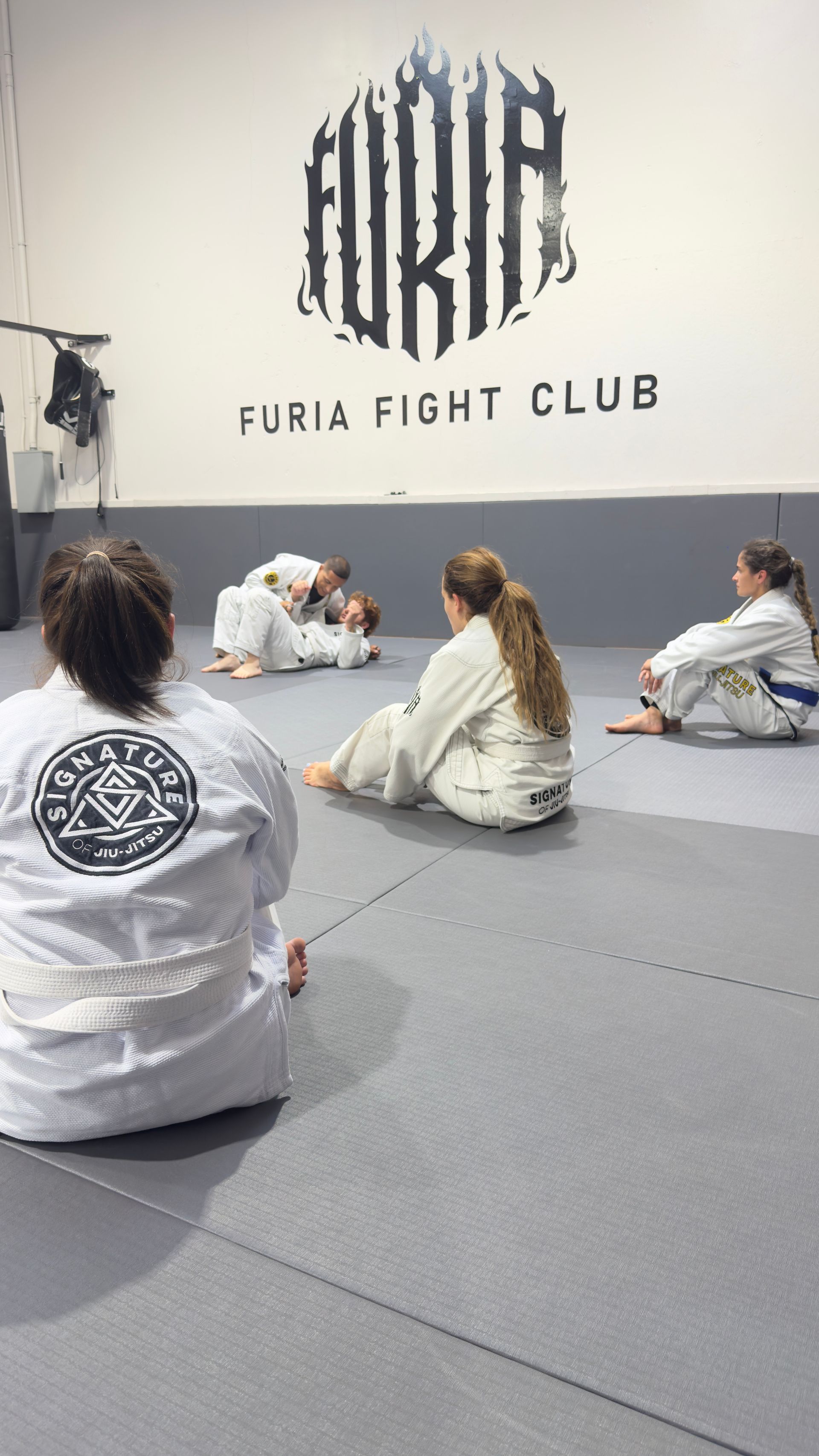
Youth Jiu-Jitsu gives kids a place to build real body control, one safe repetition at a time.
Youth Jiu-Jitsu has become a practical choice for Belmont families who want more than just “burn off energy.” National data shows 56.7 percent of U.S. kids ages 6 to 17 participated in organized sports or lessons in 2023 to 2024, nearly 28 million young people. With that many options on the table, it makes sense to choose an activity that helps your child move better, feel steadier, and grow skills that carry over into everyday life.
In our classes, coordination and balance are not side benefits. They are built into almost everything we teach. Kids learn how to control posture, shift weight, change levels, and respond to a partner’s movement without panicking or flailing. That process looks simple from the outside, but it is exactly how balance gets trained: small adjustments, done carefully, repeated often.
If you are considering Youth Jiu-Jitsu in Belmont, this guide explains how the sport develops coordination and balance, what you will typically see in a beginner-friendly class, and how we keep training age-appropriate and safe while still making it fun and engaging.
Why coordination and balance matter more than you think
Balance is not just “not falling over.” It is the ability to keep your center of gravity under control while your body is moving, changing direction, or dealing with an unexpected push or pull. Coordination is similar: it is the timing and sequencing that helps kids turn intention into clean movement, like stepping, turning, rolling, or standing up smoothly.
These skills affect a lot of day-to-day childhood life. Better balance can make running, climbing, and even sitting still in a chair feel easier. Better coordination can help with sports, handwriting endurance, and the confidence to try new physical challenges. And when kids feel capable in their bodies, their mindset often follows.
Research on youth martial arts broadly links training with improvements in balance, flexibility, strength, coordination, fitness, self-control, and stress management. A 2025 clinical review also reported improvements in cardiorespiratory fitness, strength, flexibility, and balance among martial artists ages 4 to 13. It is important to keep expectations realistic, but it is encouraging to see that martial arts can support whole-body development.
How Youth Jiu-Jitsu trains balance from the ground up
One reason Youth Jiu-Jitsu can feel approachable for beginners is that many core skills start close to the ground. Instead of requiring constant upright balance while sprinting or cutting hard, Brazilian Jiu-Jitsu in Belmont style training often begins with safe, grounded movement: sitting, kneeling, posting on hands, and learning how to roll and recover base.
That matters for kids who are still developing body awareness. Practicing near the mat can reduce fear of falling, which can reduce hesitation. When kids are less afraid, they move more freely, and that is when real coordination practice happens.
Balance in grappling is also multi-directional. Kids learn to stabilize while someone nudges them sideways, pulls them forward, or shifts their weight unexpectedly. In a controlled class, these moments are not chaotic. We teach them as predictable patterns, then slowly add variety as your child becomes more comfortable.
The movement vocabulary that builds coordination
Coordination improves when kids repeat purposeful movement patterns that require timing, posture, and control. Youth Jiu-Jitsu gives kids a surprisingly rich “movement vocabulary,” and we return to it again and again so it sticks.
Shrimping and hip escapes
Shrimping is one of the first movements many kids learn, and it is easy to underestimate. It teaches hip mobility, core engagement, and the ability to move the body while keeping shoulders and head aligned. Coordination shows up when a child can push, turn the hips, and reset without losing direction.
Bridging and rolling
Bridging teaches kids to generate power from their legs and hips while keeping the neck safe. Rolling builds spatial awareness: where the body is in relation to the mat, and how to transition without collapsing. These drills can look like play, but they train balance and coordination in a very real way.
Technical stand-ups
Standing up safely is a life skill. In Youth Jiu-Jitsu, the technical stand-up teaches kids how to build a base with a hand post, keep distance, and rise without tipping forward. It is controlled, repeatable, and great for balance training because the movement requires stable points of contact in sequence.
Breakfalls and safe landings
When kids learn how to fall correctly, the fear of falling tends to shrink. That changes how they move. They become more willing to try, more willing to pivot, and more willing to commit to a drill. We treat breakfalls as safety first, but the coordination benefit is real: timing the slap, tucking the chin, and distributing impact takes practice.
What you will see in a typical class focused on coordination and balance
A good youth program is structured. Kids do not just “go spar.” They learn through progressive drills, games with clear goals, and supervised partner work. While every day has a slightly different emphasis, our class flow generally includes a few consistent pieces that help kids feel grounded and successful.
Here is what parents often notice first:
• Warm-ups that look like movement skills, not punishment, including rolling, hip escapes, and base-building games
• Clear demonstrations where we show the exact body shape we want, then let kids try it with coaching
• Short practice rounds that keep attention high and reduce overwhelm
• Partner exercises that focus on control and positioning rather than strength or aggression
• A calm reset when kids get frustrated, because learning physical skills can be emotional sometimes
• A closing routine that reinforces listening, respect, and safe behavior on and off the mats
This structure is one reason Youth Jiu-Jitsu in Belmont can work well as an after-school routine. Kids know what to expect, and that predictability can help them settle in.
Balance is not just standing, it is base, posture, and frames
In Brazilian Jiu-Jitsu in Belmont, balance is often about base. Base is the stable platform you build with knees, feet, hips, and hands so you do not get tipped easily. Kids practice base when they learn to kneel with posture, widen their stance, or post a hand at the right time.
Posture is another key piece. We teach kids how to keep their spine aligned, chin safe, and hips underneath them. Good posture supports balance, but it also supports calm decision-making because kids feel less scrambled physically.
Frames are the third piece. A frame is a safe structure, usually using the forearms and hands, that creates space and helps manage pressure. When kids learn to frame, they stop relying on random pushing. They start using their skeleton and positioning, which is both safer and more efficient.
Why partner training improves coordination differently than solo sports
Solo drills build body control, but partner training adds timing. Your child is not just moving through space, your child is responding to another moving person. That is a different kind of coordination.
We keep partner training controlled, because the goal is learning, not “winning.” Kids learn to adjust pressure, recognize cues, and pause when something feels off. These micro-decisions matter. They are part of how motor and cognitive skills develop together, which aligns with guidance from the American Academy of Pediatrics noting martial arts can support movement skills, thinking and learning, physical fitness, stress reduction, and school performance.
We also acknowledge what the research says honestly: evidence specific to youth Brazilian Jiu-Jitsu is still developing, and many studies look at martial arts as a general category. That said, the training environment in Youth Jiu-Jitsu naturally creates repeated practice opportunities for balance, coordination, and self-control.
Age-appropriate progressions: how we teach different stages
Kids are not small adults, and a good youth program respects that. We organize learning by developmental stage so kids get the right challenge at the right time.
Younger kids: movement first
For many younger students, our priority is physical literacy. That means learning how to crawl, roll, post, rotate, and stand with control. We use games, simple positional tasks, and short drills that build coordination without long lectures.
Elementary and middle school: skills and strategy
National participation data shows strong organized sports involvement in the 9 to 11 and 12 to 14 age ranges, and we see why: kids at these stages can focus longer, handle more detailed instruction, and start connecting movements into sequences. In Youth Jiu-Jitsu, that might mean linking a hip escape into a recovery to guard, or combining a technical stand-up with safe distance management.
Older kids: controlled sparring and problem-solving
As kids mature, we can add more decision-making: positional rounds with specific goals, controlled sparring with close supervision, and technique combinations that require timing. The coordination demand increases, but so does the payoff: kids learn how to stay balanced while thinking.
Safety, supervision, and why coaching quality matters
Parents ask, rightly, whether Brazilian Jiu-Jitsu is safe for children. We treat safety as a system, not a slogan. A well-run class uses progressive training, clear rules, and constant supervision.
We also keep expectations grounded. Martial arts can support fitness and movement development, but outcomes vary based on attendance, instruction, and your child’s temperament. Our job is to provide a safe, structured place to practice and improve.
Here are the safety habits we reinforce consistently:
1. Clear rules around tapping and stopping immediately when a partner taps
2. No uncontrolled submissions, cranks, or reckless pressure in youth classes
3. Careful partner pairing by size, experience, and maturity
4. Warm-ups that prepare joints and muscles, plus cooldowns to reduce stiffness
5. Clean mats and hygiene expectations, including short nails and no jewelry
6. A culture of respect where rough behavior is corrected, not rewarded
If your child is nervous, we also use gradual exposure. A child can start with solo movement drills, then light partner games, then more interactive practice when ready. Pushing too fast is rarely helpful.
Inclusion and sensory needs: meeting kids where they are
Some families ask whether Youth Jiu-Jitsu is suitable for kids with different learning styles or sensory needs. The honest answer is that it depends on the child, the environment, and how we adapt. Reviews of martial arts participation for children with autism identify possible improvements in motor coordination, balance, communication, social interaction, and behavioral regulation, while also emphasizing the evidence specific to Brazilian Jiu-Jitsu remains limited.
We approach inclusion as individualized. When we know what your child needs, we can often adjust how we teach without changing what we teach.
Adjustments may include:
• Using simpler, step-by-step instructions paired with visual demonstrations
• Reducing sensory load by managing noise, spacing, and transitions
• Choosing partners carefully and keeping contact intensity appropriate
• Offering brief breaks so a child can reset without feeling singled out
• Communicating with you about what is working and what is not
Our goal is not to force a child into a mold. It is to create a learning path that feels safe and achievable.
Common Belmont parent questions about Youth Jiu-Jitsu
At what age can a child start Jiu-Jitsu?
Age minimums vary by readiness, but what matters most is whether your child can follow basic instructions, participate safely, and handle a group environment. Ask us about age groups, class length, and how we structure beginner learning.
Will Youth Jiu-Jitsu improve my child’s balance?
It can provide repeated practice with base, posture, rolling, bridging, and controlled transitions. Research on youth martial arts supports improvements in balance and fitness, but individual results depend on consistency and instruction quality.
Does my child need to be athletic first?
No. We build athleticism through the program. Many kids start with average coordination, and progress comes from repetition and coaching, not from being naturally sporty.
Is it mainly about fighting?
No. Youth instruction should focus on movement, control, problem-solving, respect, and responsible self-defense awareness. We teach kids to use skills safely and to treat training partners with care.
How often should kids train?
For many families, one to two consistent classes per week is a sensible starting point. It is enough to build momentum without overwhelming school and recovery.
Take the Next Step
If you want an activity that develops steadier movement and calmer decision-making under pressure, Youth Jiu-Jitsu gives your child a clear path: build the basics, practice them safely, then grow into more complex skills as confidence rises. The real win is watching kids move from wobbly and uncertain to balanced and intentional, even in small moments like a clean technical stand-up or a smooth roll.
We built our youth program at Signature of Jiu-Jitsu to make that process approachable for Belmont families: structured classes, close supervision, and coaching that values control and respect as much as technique.
Build stronger fundamentals and sharpen your technique through Jiu-Jitsu training at Signature of Jiu-Jitsu.