
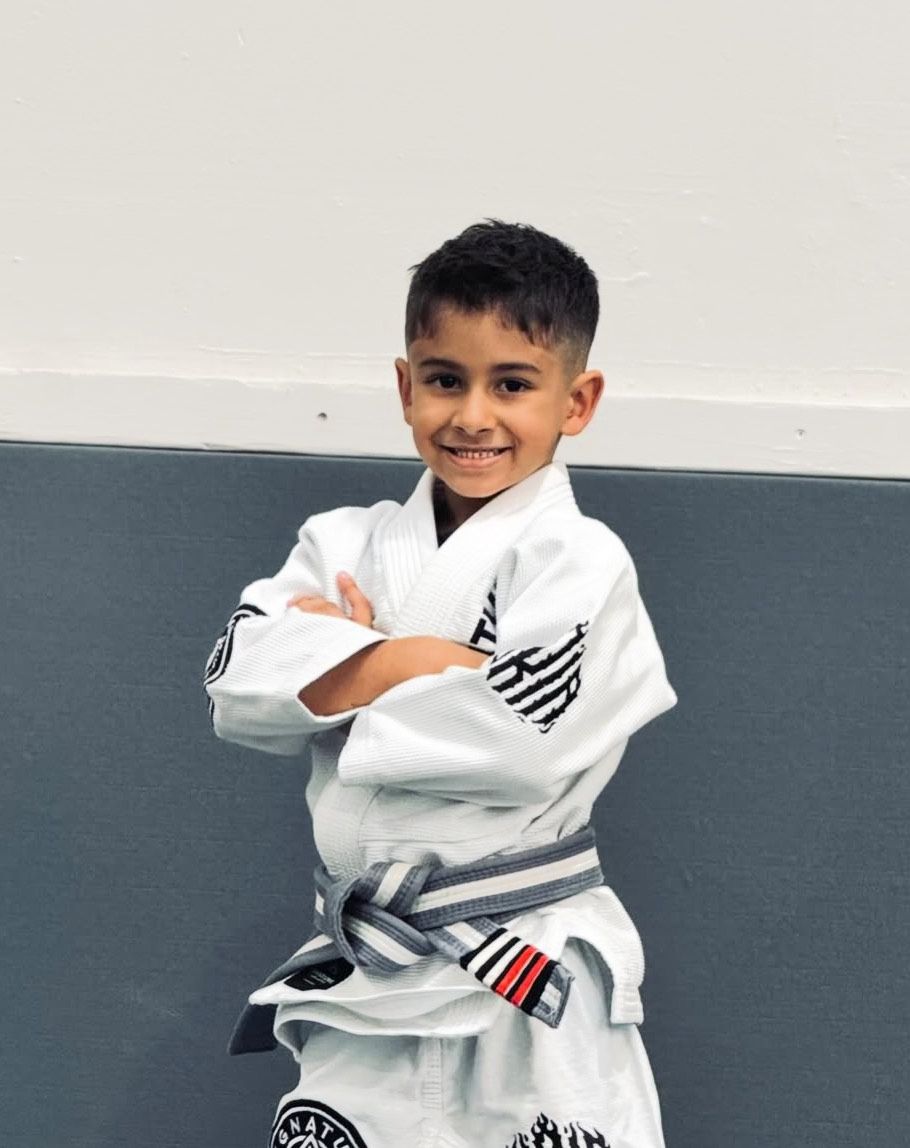
The best part of Youth Jiu-Jitsu is watching confidence grow, then realizing friendships grew right alongside it.
Youth Jiu-Jitsu is booming across the U.S., and we understand why: it gives kids a place to move, learn, and belong. With Brazilian Jiu-Jitsu search interest rising sharply over the past two decades, more families are choosing grappling-based martial arts as a long-term activity instead of a short seasonal commitment. In our corner of the Bay Area, that matters, because busy schedules are real, and you want an extracurricular that keeps paying you back.
When families ask us what makes youth Jiu-Jitsu in Belmont feel different from typical kids’ activities, we usually start with one simple truth: the mat turns strangers into teammates. Your child can walk in shy, unsure, or even a little guarded, and gradually open up through partner drills, shared goals, and the quiet pride that comes from learning something hard.
This article breaks down how friendships form in Brazilian Jiu-Jitsu in Belmont, why the structure of our Youth Jiu-Jitsu program supports healthy social growth, and what you can expect as a parent from day one through long-term training.
Why Youth Jiu-Jitsu is a natural friendship builder
Friendships in childhood rarely come from speeches about being social. They come from doing things together, especially things that require trust. Brazilian Jiu-Jitsu is built on cooperation: even when kids are “sparring,” both partners are learning, both partners are staying safe, and both partners are practicing respect.
On the mat, your child gets dozens of small chances to connect. They pair up, learn each other’s names, and problem-solve together. Over time, that turns into the easy familiarity kids usually only get from being on the same team for a whole season, except in Jiu-Jitsu it can happen year-round.
And unlike many activities where the loudest kid dominates the room, Jiu-Jitsu tends to reward calm, consistency, and attention. That shift helps quieter kids find their place.
Shared challenge creates real bonds
One reason Youth Jiu-Jitsu friendships last is that the challenges are shared and visible. Learning how to shrimp, bridge, frame, or escape side control is not instant. Kids struggle, laugh, reset, and try again. That cycle creates empathy because everyone remembers what it felt like to be brand new.
We also see a special kind of camaraderie when kids realize progress is not linear. Some days click; other days feel sticky. When your child hears, “That happened to me too,” from a training partner, it turns frustration into connection.
The social skills kids practice without realizing it
Most parents enroll for confidence, discipline, anti-bullying skills, or fitness. Those are real outcomes. But the “hidden curriculum” in Youth Jiu-Jitsu is social development: your child practices respect, teamwork, and communication in a setting that is structured but still very human.
Here are a few social skills that show up naturally in our classes:
• Taking turns and sharing space, because training partners rotate and everyone gets mat time
• Communicating clearly, because kids learn to ask questions and confirm what a drill is supposed to look like
• Managing strong emotions, because wins and losses happen in tiny moments throughout class
• Respecting boundaries, because we teach consent-based training habits like tapping early and resetting safely
• Supporting peers, because higher-ranked students often help newer students with basic movements and routines
These are not abstract lessons. Your child feels them in their body, over and over, until they become normal.
How our class structure supports friendships (and safety)
A safe environment is a social environment. Kids do not relax enough to make friends when the room feels chaotic. Our Youth Jiu-Jitsu classes are designed with clear routines, age-appropriate expectations, and coaching that keeps training focused.
We also lean into Gi training for youth because it encourages control. The Gi slows things down, gives kids grips that help them manage distance, and supports a structured belt progression that keeps motivation steady. For many families, the belt system is not about “winning.” It is about having a shared path, where your child and their training friends celebrate milestones together.
Injury rates for novices tend to be low overall, and the biggest safety difference is supervision and structure. That is why we keep classes coached, intentional, and progressive. You should be able to watch your child train and feel your shoulders drop a little, not tense up.
Consistent partner work creates community
Friendships do not form from a single class. They form from repeated, low-pressure interaction. Partner drills are perfect for that. Your child works with someone for a few minutes, switches, works again, switches again. It is social practice without the awkwardness of “go make friends.”
Over time, kids start to recognize familiar faces, look forward to certain partners, and feel comfortable enough to be themselves. That’s when you see the real magic: kids start encouraging each other mid-drill, or celebrating a small improvement like a clean technical stand-up.
What parents in Belmont care about most (and how Youth Jiu-Jitsu helps)
Belmont families are busy, thoughtful, and often looking for activities that build more than just physical skills. We hear a few themes again and again, and Youth Jiu-Jitsu addresses them in a grounded, practical way.
Confidence that is earned, not hyped
Confidence in Jiu-Jitsu is not based on being the strongest kid in the room. It is based on learning a process: listen, try, fail safely, adjust, repeat. That kind of confidence tends to stick, and it shows up at school, at home, and in peer relationships.
Anti-bullying skills without turning kids into bullies
Parents want kids to feel safer, but also kinder. Jiu-Jitsu does that well because the art itself teaches leverage and control. Your child learns what it means to handle pressure without panicking, how to create space, and how to stay composed. Those skills can reduce a bully’s power, but they also reduce the urge to escalate.
Just as important, the culture we build on the mat emphasizes respect. Kids learn quickly that strength without control is not valued here.
Healthy movement in a screen-heavy world
Childhood movement has changed. More sitting, more screens, fewer unstructured outdoor hours. Youth Jiu-Jitsu gives kids a full-body workout that feels like play but builds real athleticism: coordination, grip strength, balance, mobility, and cardio.
It also helps with body awareness. Kids learn where their limbs are in space, how to fall safely, and how to move under pressure. That kind of physical literacy is useful in every sport and in everyday life.
The first few weeks: what your child typically experiences
New students usually arrive with a mix of excitement and uncertainty. That is normal. Our job is to make the first phase feel welcoming, clear, and doable.
In the early weeks, your child learns the rhythms of class: lining up, warming up, drilling a technique, then practicing a controlled version of live movement. At first, friendships often start quietly, like standing next to the same kid during warm-ups or laughing when both partners forget which direction the drill goes. Then it becomes a little more obvious: high fives, inside jokes, and the simple comfort of having “someone you know” on the mat.
Here is a simple, realistic progression many families notice:
1. Week 1: Your child learns basic rules, how tapping works, and a couple foundational movements
2. Weeks 2 to 3: Familiar faces become friendly faces, and partnering feels less intimidating
3. Weeks 4 to 6: Small wins start stacking, and confidence becomes visible in posture and eye contact
4. Month 2 and beyond: Friendships deepen because your child shares goals, drills, and milestones with the same training group
This timeline is not rigid, but it is common. Kids grow at their own pace, and we coach them that way.
Friendship for teens: belonging, identity, and positive pressure
Teens are not just “older kids.” The social stakes are higher, and the need for belonging is huge. Youth Jiu-Jitsu gives teens a place where effort matters more than popularity, and where progress is tracked through skill, not social status.
BJJ also attracts students for reasons beyond self-defense. Nationally, only a minority start purely for defense, while many report benefits like mental sharpness and problem-solving. That makes sense: grappling is a chess match with consequences, and teens often love the strategy once they realize it is not just “wrestling around.”
For teen friendships, the mat creates positive pressure. Training partners expect you to show up, improve, and treat people well. Over time, that can be a stabilizing force, especially during stressful school years.
What makes a Youth Jiu-Jitsu community last
Lasting friendships are not accidental. They come from consistent values and consistent experiences. We focus on a few pillars that keep the community healthy:
• Clear standards for respect, including how partners talk to each other and how we handle mistakes
• A curriculum that progresses, so kids feel a shared sense of direction instead of random techniques
• Recognition that effort counts, because kids stay connected when they feel seen for trying
• A culture that welcomes girls and boys equally, reflecting the continued rise in female participation in martial arts
• Opportunities for different goals, so your child can train for fun, fitness, confidence, or competition without pressure
When kids feel safe, supported, and challenged, friendships form in a way that feels natural, not forced.
Take the Next Step
Building social confidence is not a lecture you give your child, it is a lived experience, practiced in small moments over time. That is what we aim to provide every day on the mat: a place where kids work hard, laugh a little, learn respect the practical way, and leave class feeling more connected than when they arrived.
If you are looking for Youth Jiu-Jitsu that prioritizes both skill and community, our programs at Signature of Jiu-Jitsu are designed to help your child grow into the kind of teammate people want around, on the mat and off it.
Become part of a community committed to growth and respect by joining a Jiu-Jitsu class at Signature of Jiu-Jitsu.