In one class, you can work your whole body, sharpen your mind, and leave feeling noticeably lighter.
In Belmont, it is common to want more from a workout than burned calories. You want energy that lasts past the evening commute, strength that shows up in real life, and a way to reset your mind when the week feels packed. That is where Jiu-Jitsu fits so well: it is fitness, problem-solving, and stress relief bundled into one practice you can actually stick with.
We see beginners come in with a simple goal like getting in shape, then realize something else happens too. Training gives you a place to focus on one thing at a time, breathe, and learn. Over time, that becomes a habit that carries into work, school, and the way you handle pressure.
And while Brazilian Jiu-Jitsu in Belmont keeps growing nationwide and locally, what makes it last is not hype. It is the fact that you can start at any age, progress at your pace, and feel the benefits quickly, especially when training is taught in a structured, safety-first way.
Why Jiu-Jitsu works when typical workouts stop working
Most fitness plans are linear: run faster, lift heavier, do more reps. But real life is not linear. Some weeks you feel great, other weeks you feel tight, stressed, or just mentally fried. Jiu-Jitsu adapts because each class is scalable. We can keep the same theme, but adjust the intensity and complexity based on where you are that day.
That flexibility matters because the training is naturally “full-body.” Grappling demands legs, hips, core, back, and grip strength, plus cardio that spikes and settles in waves. You build strength and endurance without needing to stare at a timer. You are too busy solving the next problem.
Another reason it works is the mental engagement. When your brain is occupied with posture, balance, timing, and distance, you are not ruminating on everything else. Many students describe this as the closest thing to mindfulness that feels practical, because you are present or you get swept up by the moment.
Fitness benefits you can feel, not just measure
Jiu-Jitsu is known for technique, but the physical conditioning is real. Research on Brazilian Jiu-Jitsu points to broad improvements in cardiovascular health, muscular strength, endurance, flexibility, mobility, and circulation. Those are not “nice extras.” Those are the pillars of feeling good in your body, especially as schedules get busy and movement gets squeezed.
We also like that it is functional. You learn how to move your body as a connected system. Hips and shoulders become more mobile. Your balance improves. You start noticing that stairs feel easier, posture feels taller, and little aches settle down as your movement quality improves.
If you are looking for a simple training rhythm, we usually recommend consistency over intensity. Two to three classes per week is enough for most adults to feel a noticeable shift in conditioning and energy in the first month. And if you train more, we help you recover well so progress stays steady instead of feeling like a crash cycle.
What “functional fitness” looks like on the mats
Functional is a buzzword, but here it is concrete. In a typical class, you might work:
• Hip escapes and bridges that build core strength while teaching safe movement under pressure
• Controlled takedown entries that develop balance, footwork, and coordination
• Positional drills that strengthen your legs and back without repetitive gym strain
• Timed rounds that raise your heart rate like intervals, then teach you to recover while moving
• Grip and pulling strength through holds and frames that translate into real-world resilience
That mix is why Jiu-Jitsu can feel like you trained everything, even when the class was focused on a single concept.
Focus, stress relief, and the “busy mind” reset
People often come to us for fitness and stay for the mental benefits. Studies on BJJ participation report major improvements in mood and anxiety, with many practitioners noting reduced anxiety and stronger confidence. One of the most consistent findings is community: people report feeling connected, and that matters more than it gets credit for.
There is also the skill of staying calm under pressure. In sparring, you learn to breathe while solving problems. You learn that discomfort does not automatically mean danger. That lesson sounds small, but it can change how you handle hard conversations, deadlines, and even traffic.
The focus benefit is not abstract. You are constantly practicing attention control: notice your position, decide your next step, commit, and adjust. That is mental flexibility in real time. Over weeks, that practice tends to show up in daily life as better concentration and less emotional reactivity.
Why it is safe to start, even if you feel out of shape
Safety is a fair concern, especially if you have not trained a martial art before. The good news is that Brazilian Jiu-Jitsu has a lower injury rate than several higher-impact combat sports, and training can be structured to protect beginners while still making progress.
We control intensity by teaching positions before resistance, encouraging tapping early, and pairing students thoughtfully. You do not need to “win” anything in your first month. You just need to learn how to move, how to protect yourself, and how to communicate during training.
If you have old injuries or feel stiff, we can still work. Jiu-Jitsu is adjustable. Many people begin cautiously, then discover that consistent mobility work and controlled movement improves how their joints feel, especially hips, knees, shoulders, and lower back. The key is patience and good coaching, not pushing through everything.
Youth Jiu-Jitsu in Belmont: confidence, attention, and better habits
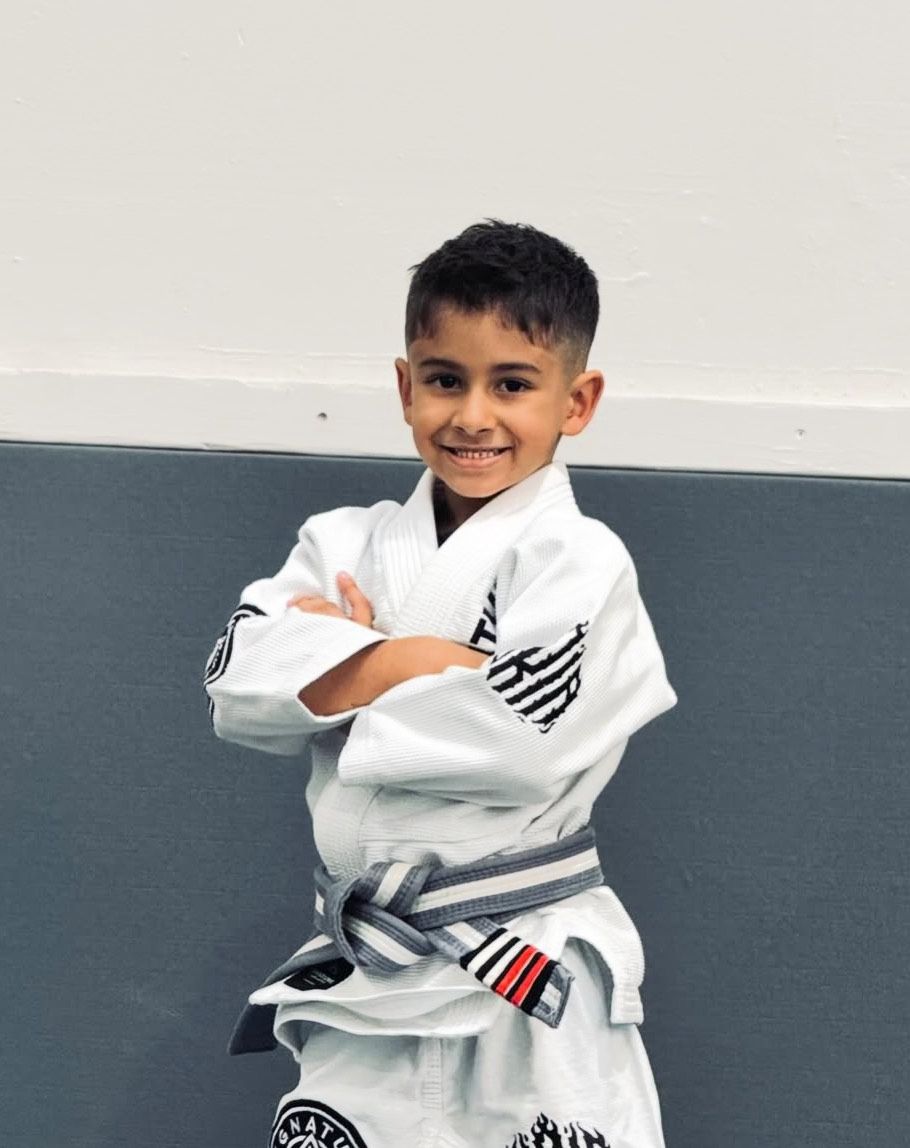
For families, youth Jiu-Jitsu in Belmont can be a surprisingly practical support system. Kids are asked to focus all day, then we expect them to magically have perfect emotional regulation at home. Training gives them a structured outlet where focus and self-control are practiced, not just talked about.
Research on youth training shows improvements in concentration and respect, and many children demonstrate reduced emotional symptoms and hyperactivity after consistent practice. In plain terms: we often see kids leave class calmer than when they arrived, with a proud, steady kind of tired.
Our youth program emphasizes fundamentals, safety, and positive structure. We keep the room organized and clear. Kids learn how to follow directions, work with partners, and handle small frustrations. That is where confidence comes from, not from pretending everything is easy.
Skills kids tend to carry from class into school and home
We hear the same themes from parents and students over and over, and they line up with the research on life-skill transfer:
• Listening the first time because instructions affect outcomes right away
• Sticking with hard tasks long enough to see progress
• Practicing respectful boundaries through partner drills and controlled contact
• Learning to lose a position, reset, and try again without melting down
• Building quiet confidence from competence, not from hype or trash talk
Those lessons grow more valuable as kids move into middle school and beyond, when pressure and social dynamics get more complicated.
Adults, including over 40: strength, circulation, and staying sharp
One of the most overlooked benefits of Jiu-Jitsu is how well it supports longevity when taught intelligently. Studies on older practitioners highlight improvements in circulation, vitality, mental sharpness, and overall well-being. That tracks with what we see: adults want training that challenges them, but also respects recovery and joint health.
For over-40 students, we put extra emphasis on movement quality, pacing, and positional safety. You still get real training. You still improve. But you do it in a way that supports your life instead of competing with it.
There is also something refreshing about learning a skill as an adult. It is not just exercise. It is personal development with measurable milestones. You remember techniques, you solve problems, you earn progress through consistency. That does something positive for motivation, especially if your usual workouts have started to feel repetitive.
The social side: community that actually helps you show up
It is hard to build habits alone. A community makes consistency easier, and consistency is what drives results. People often report a strong sense of belonging in Jiu-Jitsu, and we treat that as part of the training environment, not a side effect.
In practice, it looks like partners who help you learn, coaches who notice patterns and guide you, and a room where effort is respected. When you train with the same group each week, you build familiarity. You stop feeling like you have to “perform.” You just train, ask questions, and improve.
Fun matters too. Not every round is serious. Sometimes you laugh because you got caught in something simple, then you learn how to fix it. That lightness is part of why people stick with it.
What your first month typically looks like
Starting anything new can feel awkward for about two weeks. That is normal. We structure the early experience so you can learn fundamentals without feeling overwhelmed, and so your body adapts without unnecessary strain.
Here is a realistic month-one progression we aim for:
1. Week 1: learn basic movement, tapping, posture, and a few core positions
2. Week 2: add simple escapes and control concepts, plus light positional rounds
3. Week 3: connect techniques into short sequences and build cardio confidence
4. Week 4: start seeing patterns, moving more smoothly, and feeling “less lost”
5. Ongoing: choose goals like fitness, self-defense, or skill progression and train consistently
You do not need to be in shape before you start. Training is how you get in shape, and the program is designed to meet you where you are.
Self-defense value without the drama
A lot of people want practical self-defense, but they do not want a high-stress environment. Jiu-Jitsu is effective because it addresses common real-world problems: controlling distance, staying safe in close contact, escaping bad positions, and using leverage instead of brute force.
We teach with realism and responsibility. You learn how to stay calm, how to protect yourself, and how to make good decisions. The goal is competence, not fear. And for many students, the biggest self-defense upgrade is simply becoming harder to overwhelm, physically and mentally.
Take the Next Step
If you are looking for a training path that supports fitness, focus, and genuine enjoyment, that is exactly what we build every day at Signature of Jiu-Jitsu. Our approach is structured, progressive, and welcoming, so you can start whether you are brand new, returning after a break, or bringing a child who needs a positive outlet.
When you are ready, we will help you plug into the class schedule, learn the fundamentals the right way, and experience why Jiu-Jitsu keeps people coming back. Signature of Jiu-Jitsu is here in Belmont for the long haul, and we would love to be part of yours.
Improve your fitness, confidence, and grappling ability by joining a Jiu-Jitsu class at Signature of Jiu-Jitsu.