Jiu-Jitsu gives beginners a rare mix of practical self-defense, full-body fitness, and steady confidence you can actually feel week to week.
Starting something new can feel oddly complicated, especially when it involves a martial art. Most beginners in Belmont tell us they want three things from Jiu-Jitsu: real skills (not just theory), a stronger body that moves better, and confidence that carries into regular life.
Our job is to make that beginning simple and welcoming without watering anything down. Brazilian Jiu-Jitsu is famously technical, but that is exactly why it works for beginners: you do not need a certain body type or background to make progress, as long as you train consistently and learn the fundamentals the right way.
If you are looking for Brazilian Jiu-Jitsu in Belmont that feels structured, friendly, and goal-driven, the best starting point is understanding what training actually looks like, what you will learn first, and how we keep the experience safe and motivating from day one.
Why Jiu-Jitsu works so well for beginners
Jiu-Jitsu is a grappling-based martial art built around leverage, control, and timing. In plain terms, we learn how to manage distance, off-balance an opponent, and use positioning to stay safe. That emphasis on technique over brute strength is the reason beginners often feel “I can do this” faster than expected.
In early training, you start building a map of common positions and what they are for. You learn how to protect yourself, how to escape, and how to stabilize before you ever worry about being flashy. That structure matters because it replaces uncertainty with a repeatable plan, and beginners thrive with a plan.
Another benefit is that progress is measurable. You will notice your breathing improves, your balance improves, and your ability to stay calm under pressure improves. That calm is not accidental. It is trained.
What to expect in your first few classes
Most people worry about two things: getting hurt and not knowing what to do. We take both seriously. Our beginner experience is designed to be guided, clear, and paced so you can absorb details without feeling overwhelmed.
A typical class includes a warm-up that prepares your joints and hips for grappling, technique instruction with step-by-step coaching, and partner drills where you repeat the movement until it starts to feel natural. Depending on the class format, you may also do controlled sparring, but we scale intensity appropriately and help you choose partners who support your learning.
Expect a learning curve, but not a harsh one. The room is active, you will sweat, and you will make small mistakes constantly. That is normal. In fact, it is how you learn Jiu-Jitsu efficiently.
Gi and No-Gi: two formats, one foundation
Beginners often ask whether they should start with Gi or No-Gi. We teach both, and each has advantages. The key is that both formats reinforce the same fundamentals: posture, base, frames, pressure, and positioning.
Gi training
The Gi adds grips on sleeves, collars, and pants, which slows things down just enough to make details easier to study. You learn how to break grips, how to use grips to control posture, and how to stay patient while you improve.
No-Gi training
No-Gi removes most cloth grips, so movement and body positioning become even more important. You learn to connect with underhooks, head position, and tight control. It can feel faster, but the same beginner rules apply: protect yourself first, then improve position, then pursue submissions.
Over time, training both helps you feel more complete. You start recognizing the same problems in different clothing, and that is a sign your Jiu-Jitsu is getting real.
The beginner skills that build confidence fast
Confidence does not come from “winning rounds.” It comes from knowing what to do when you feel stuck. For beginners, we prioritize skills that show up everywhere, whether you train for self-defense, fitness, or competition.
Here are the core areas we build early:
• Escapes that work: You learn how to get out from under pressure using frames, hip movement, and timing instead of panic.
• Positional control: We teach how to hold top positions safely and how to avoid giving away easy reversals.
• Guard fundamentals: You learn what guard is, why it is powerful, and how to use it to manage distance and protect yourself.
• Takedown awareness: We cover how to enter safely, how to defend common takedowns, and how to land with control.
• Submissions with purpose: We introduce submissions as the last step of a process, not as random tricks.
This approach is especially important for smaller beginners. When technique is organized, you stop feeling like you are guessing.
Self-defense, but taught in a practical way
Self-defense is a big reason many Belmont beginners try Jiu-Jitsu. We respect that, and we keep it practical. We focus on controlling situations, creating space, and using leverage to handle larger opponents. That includes learning how to stay safe from bad positions, how to protect your head and posture, and how to avoid giving up your back.
We also treat self-defense as more than technique. Awareness, decision-making, and staying calm matter. Training helps because it gives you pressure-tested experience in a safe environment. You learn what adrenaline feels like, how to breathe through it, and how to keep your thinking online.
If you want the confidence of knowing you can handle yourself, the best path is consistent training with fundamentals that hold up under resistance.
Strength and conditioning that does not feel like a treadmill
Jiu-Jitsu builds a specific kind of strength. It is not just “lift heavier.” It is grip endurance, hip mobility, core stability, and the ability to generate pressure while staying relaxed. Beginners often notice sore forearms, tired legs, and a stronger back within the first month, even if they have not been in a gym in years.
You also develop cardiovascular fitness in a way that feels more engaging than typical cardio. Rounds are dynamic and mentally demanding. You are not just counting minutes. You are solving a problem with your whole body.
That said, we do not rely on chaos for conditioning. We structure drilling so you can build volume safely and gradually. Your body adapts, and you start feeling more capable in everyday movement.
Youth Jiu-Jitsu in Belmont: discipline without the harshness
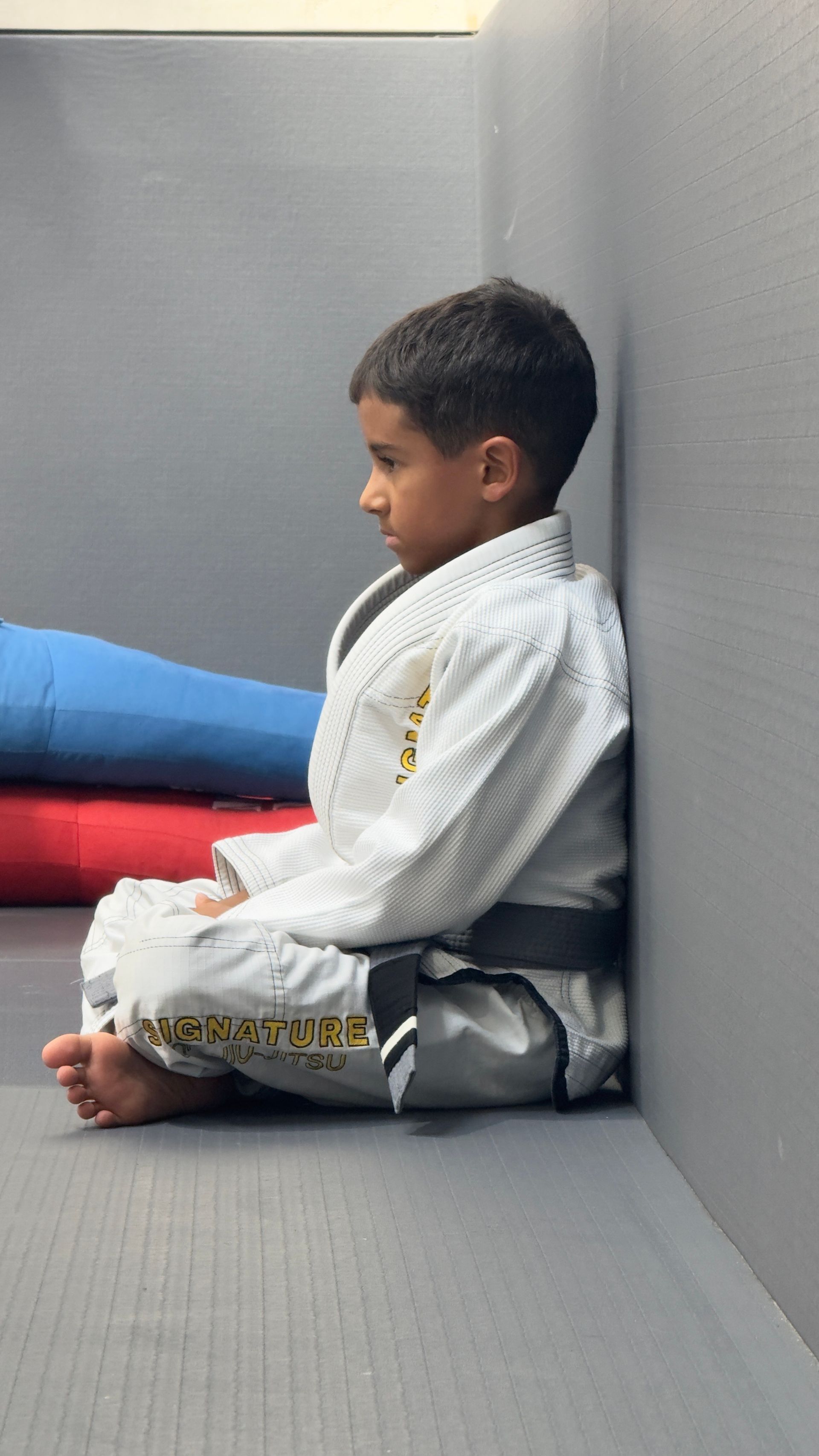
Families often come to us looking for youth Jiu-Jitsu in Belmont because they want their kids to build confidence, learn boundaries, and get off screens for a bit. We love that goal, and we treat kids training with real care. Children learn differently than adults, so our coaching uses clear cues, repetition, and positive structure.
We emphasize habits that transfer outside the academy: listening skills, respectful partner work, and persistence when something is difficult. Kids also learn anti-bullying principles through posture, awareness, and controlled grappling. The point is not to create aggression. The point is to create steadiness.
Parents also appreciate that training gives kids a safe place to be active and challenged. Over time, you will see better coordination, better emotional regulation, and a calm kind of confidence that shows up at school.
Our coaching approach: progress you can track
One of the most frustrating beginner experiences is feeling like you are doing a lot but not sure if you are improving. We avoid that by coaching with structure and feedback. Our instruction is led by Professor Atahide “Taidi” Santana, a registered IBJJF black belt under Master Charles Gracie with more than 13 years of experience. That lineage and experience matter, but what matters even more day to day is how we teach.
We use a personalized approach we call our Winner’s Methodology. In practice, that means we pay attention to where you are right now and what you need next. Sometimes that is a basic escape. Sometimes it is learning to slow down. Sometimes it is simply learning how to breathe and frame correctly.
Progress becomes less mysterious when you know what you are training for. And honestly, beginners stick with Jiu-Jitsu longer when improvement feels visible and realistic.
A safe, respectful room for beginners
Safety is not just rules. It is culture. We build a training environment where partners take care of each other, beginners can ask questions without feeling awkward, and intensity is something we manage intentionally.
We also teach you how to train safely. That includes tapping early, communicating with partners, and understanding what “controlled resistance” means. Sparring should be challenging, but it should also be productive. If you are brand new, we guide you into it in a way that makes sense.
For many people, this becomes a community as much as a workout. The room feels welcoming, but training is still real. That balance is important.
How to start, even if you feel out of shape
You do not need to get in shape before starting. Jiu-Jitsu is how you get in shape, and we build from fundamentals so your body adapts without getting wrecked. The best thing you can do is show up consistently and keep your ego light. Beginners improve fastest when they focus on small wins: better posture, cleaner escapes, and calmer decision-making.
If you want a simple path, follow this:
1. Pick a realistic weekly schedule you can maintain, even on busy weeks.
2. Focus on fundamentals for the first two to three months, especially escapes and guard.
3. Ask one question per class and apply the answer immediately in drilling.
4. Keep sparring playful and technical, not intense and exhausting.
5. Track one improvement each week so progress stays tangible.
This is also how Brazilian Jiu-Jitsu in Belmont becomes a long-term practice instead of a short burst of motivation.
Ready to Begin
Building skill in Jiu-Jitsu is not about being fearless or athletic on day one. It is about learning a reliable system, training it with good partners, and letting confidence show up naturally as your competence grows. When you train with us consistently, you will feel stronger, move better, and handle pressure with a calmer mind.
That is exactly what we built at Signature of Jiu-Jitsu in Belmont: a family-friendly place where beginners can learn real Brazilian Jiu-Jitsu with expert guidance, a clear pathway forward, and a culture that respects your pace while still challenging you.
Continue your Jiu-Jitsu journey beyond this article by joining a class at Signature of Jiu-Jitsu.