
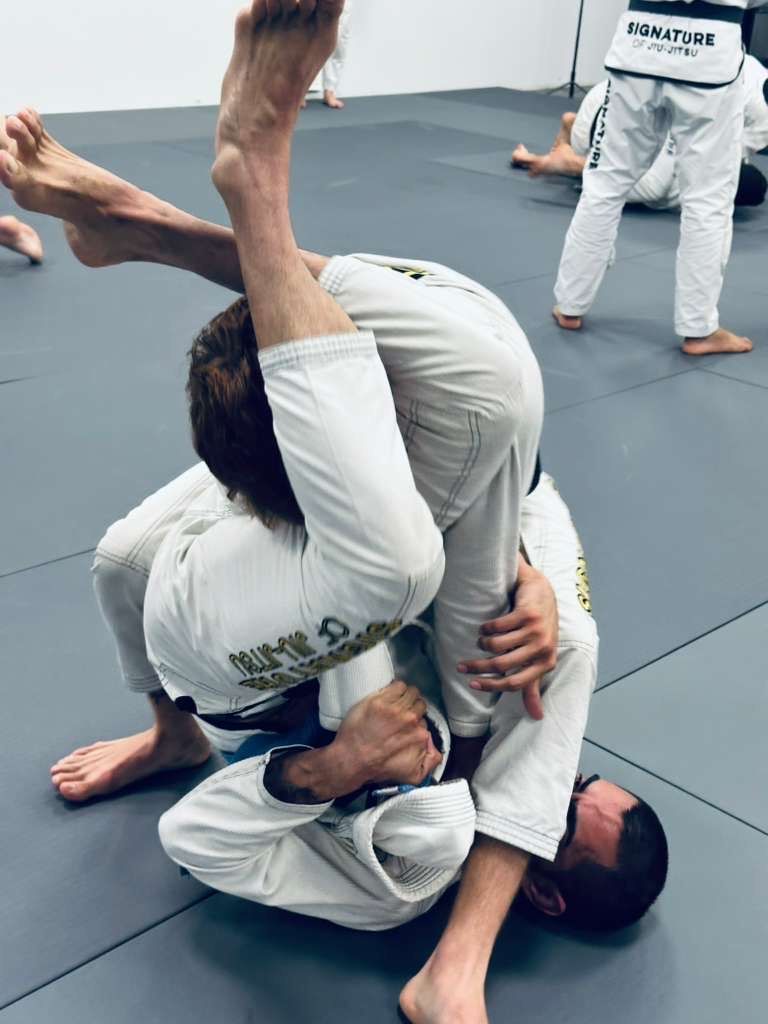
Jiu-Jitsu gives you a repeatable way to build a stronger body and a calmer mind, one class at a time.
If you live or work around Belmont, you already know the pace can feel fast and mentally crowded. We meet a lot of people who are doing all the “right” things for health, lifting a bit, walking, trying to sleep more, but still feel scattered or stiff by the end of the day. That is where Jiu-Jitsu surprises people: it is physical training that also organizes your attention.
Jiu-Jitsu is not just a workout you get through. It is a practice you return to, and that matters when your goal is daily strength and focus, not a short burst of motivation. Our classes are built to help you train consistently, progress safely, and leave the mat feeling more capable than when you walked in.
Belmont is also a great place to start because you can train close to home while staying connected to the larger Bay Area scene. The sport has grown quickly, including major events in California, and that energy is real, but your day-to-day progress still comes down to what you do on an ordinary weeknight.
What “daily strength” actually means in Brazilian Jiu-Jitsu
When people hear strength, they often picture bigger muscles or heavier weights. We care about that kind of strength too, but Brazilian Jiu-Jitsu in Belmont usually builds something more useful first: controlled strength.
Controlled strength is the ability to stay stable while moving, to breathe under pressure, and to apply force only when it helps. On the mat, you learn how to connect your hips, posture, and framing so your body works as a unit. Off the mat, that can look like fewer aches from sitting, better balance, and a surprising boost in general athletic confidence.
Another practical piece is grip and core endurance. A typical class naturally develops your hands, forearms, and midsection without you chasing random exercises. You will feel it, in a good way, especially early on. And because techniques create leverage, you are not stuck in the loop of “I need to be stronger before I can start.” You start, then you get stronger.
Why Jiu-Jitsu is a focus practice, not only a martial art
Focus is a skill, and we treat it like one. In class, you cannot scroll, multitask, or mentally drift for long, because your training partner gives immediate feedback. If your mind wanders, you lose position. If you rush, you miss details. That gentle pressure makes Jiu-Jitsu a reliable way to train attention.
We also structure classes so you can lock into one theme at a time. You might work a specific escape, a guard pass concept, or a simple submission chain. That kind of repetition is not boring when you understand what to look for. You start noticing tiny cues: where your elbow is, how your hips angle, when your partner shifts weight. Those cues become your new “focus anchors.”
Over time, many students tell us their workday attention improves. Not because we promise magic, but because your nervous system gets used to one clean task at a time: solve the problem in front of you, breathe, adjust, continue.
Why starting Jiu-Jitsu in Belmont, CA makes practical sense
Training has to fit your life, or it does not last. That is one reason Jiu-Jitsu in Belmont CA is such a smart option: you can build a consistent routine without turning training into a long commute or a whole production.
Cost matters, too. Across California, average monthly Brazilian Jiu-Jitsu dues sit around 155.79 based on recent survey data, which puts local training in a reasonable range for many households. We encourage you to treat training like a long-term investment, not a short-term splurge, because progress in this art is built over months and years.
Belmont also benefits from being near a wider competitive ecosystem in California. Even if you never plan to compete, being in a state with active events and serious training culture raises the overall standard. You feel it in the details people care about, the pacing of rounds, and the way goals get set.
The belt path: realistic timelines and why patience wins
One of the best things about Jiu-Jitsu is that you do not “finish” it quickly. That can be intimidating at first, but it is also why it works for daily strength and focus. You always have a next layer to build.
A large 2024 and 2025 survey of nearly 2,000 practitioners found average timelines like these:
1. White belt averages about 2.3 years
2. Blue belt takes about 2.3 years to earn, with an average of 3.3 years spent at blue
3. Purple belt averages about 5.6 years to earn, with about 3.4 years spent at purple
4. Brown belt averages about 9.0 years to earn, with about 4.4 years spent at brown
Those numbers are not a promise, and you should not use them to pressure yourself. What they do show is that consistent training adds up, and that the early belts are a meaningful phase, not a quick tutorial.
In our programs, we focus on helping you build “portable” skills early: posture, base, movement, escapes, and simple controls. When those are solid, everything else becomes easier, and your body feels better doing it.
Injury reality check, and how we train smarter
We take safety seriously because we want you training next month, not just this week. Injury risk exists in any contact sport, and Brazilian Jiu-Jitsu is no exception. Research has shown that 59.2 percent of athletes reported at least one injury in a prior six-month period, and risk tends to increase with higher belts and higher training volume.
The encouraging part is that a lot of risk is manageable with good habits and a sane training plan. Newer students, for example, often get hurt in training more than in competition, which suggests that day-to-day choices matter: intensity, partner selection, and how quickly you ramp up.
Here is how we help you reduce risk without draining the fun out of training:
• We emphasize tapping early and often, especially while you are learning what pressure feels like
• We coach pacing so you can roll with control instead of going full speed on every exchange
• We prioritize positional basics before complex scrambles, because predictable movement is safer movement
• We encourage 2 to 3 classes per week at the start so your joints and muscles adapt gradually
• We talk openly about recovery, including sleep, hydration, and taking a rest day when your body asks for it
You will still sweat, and you will still be challenged, but you should also feel like your training is sustainable. That is the whole point.
What a typical class feels like (and why it works)
People sometimes worry they will be “thrown in” and expected to survive. That is not how we run class. We want you to learn, and learning requires structure.
Most classes include a warm-up that supports movement skills you actually use, then technique instruction with clear steps, then drilling so you can repeat the motion enough times to own it. After that, we add controlled resistance, often starting from specific positions so you are not lost.
Sparring, when you do it, is where focus sharpens. It can feel intense in a quiet way. You hear breathing, feet shifting, maybe a quick laugh when something unexpected works. You also learn to stay calm while your heart rate climbs, which is a life skill as much as a fitness benefit.
Membership options and training rhythms that fit real life
Most adults do best with a simple, repeatable routine. We help you choose a rhythm that supports progress while still leaving room for work, family, and the occasional week where everything gets busy.
If you are brand new, starting with 2 to 3 sessions per week is often the sweet spot. You get enough repetition to improve, but you also give your body time to recover and adapt. If you have trained before, we can guide you toward a schedule that matches your goals, whether that is skill development, fitness, or preparing for a tournament.
We also keep the pathway clear: show up, follow the curriculum, ask questions, and track your progress. When you can see what you are working on and why, motivation stays steady, even when life gets loud.
How Jiu-Jitsu changes your day outside the gym
The biggest payoff is that training does not stay on the mat. You carry it into normal life.
Physically, you may notice better posture at your desk, stronger hips and core, and more comfort moving through daily tasks. Mentally, you may notice you recover from stress faster. When you get used to solving problems under pressure in Jiu-Jitsu, a tense meeting or a packed calendar feels a little less personal.
There is also a quiet confidence that comes from competence. Not bravado, not aggression, just the sense that you can handle friction without panic. That is a smart kind of strength for Belmont life.
Take the Next Step
Building daily strength and focus is not about finding the perfect routine. It is about choosing a practice you can repeat, even on weeks when motivation is low. That is why we teach the way we do: structured classes, measurable skill development, and an environment where you can work hard without feeling reckless.
If you want a clear starting point for Brazilian Jiu-Jitsu in Belmont, we would love to help you take that first class and make it feel doable. At Signature of Jiu-Jitsu, we keep the path simple: show up, learn the fundamentals, train consistently, and let progress compound.
Strengthen both your body and mind through consistent Jiu-Jitsu training at Signature of Jiu-Jitsu.