
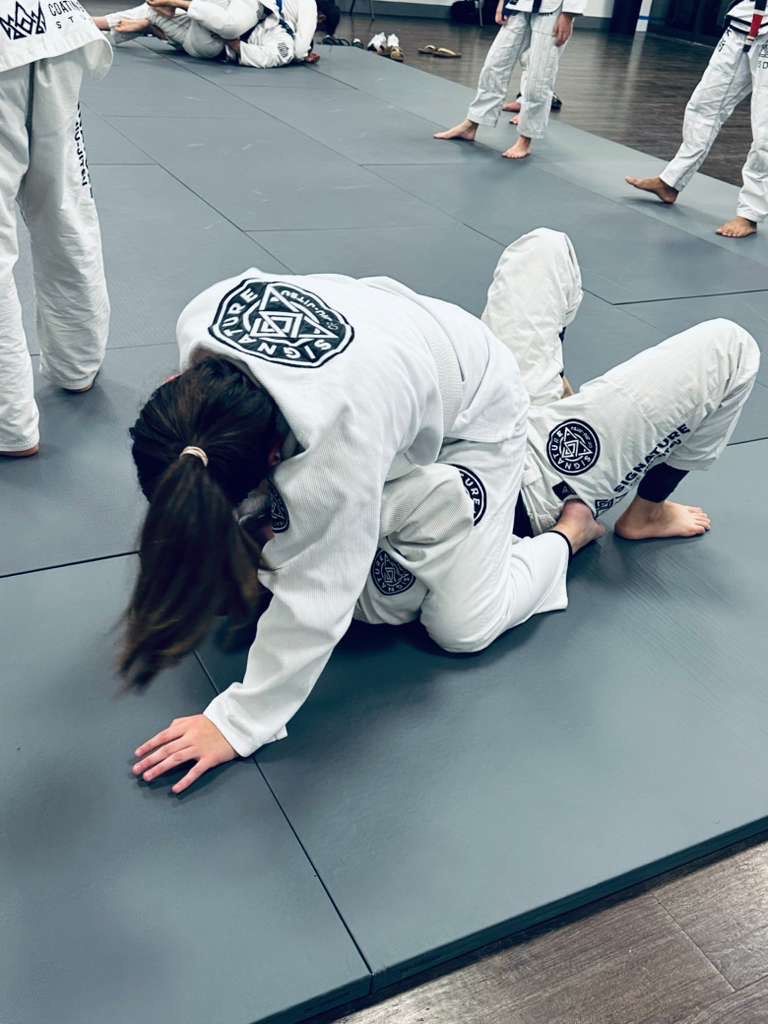
The right kind of pressure in training can teach you how to stay calm, think clearly, and keep going when life gets hard.
Resilience gets talked about like you either have it or you do not, but in our experience, it is something you build through practice. Jiu-Jitsu gives you a structured way to do that because every class asks you to solve problems with your body, your breath, and your mindset. You learn to adapt, reset, and try again, even when you are tired or uncomfortable.
Here in Belmont, life can move fast. Work stress, school pressure, family responsibilities, and the constant mental noise of modern routines can add up. Our classes are designed to be a place where you can train hard, learn steadily, and walk out feeling more capable than when you walked in, not just physically, but mentally too.
Research backs up what we see on the mats. Consistent Brazilian Jiu-Jitsu training is linked to measurable improvements in resilience, mood, and stress management, with benefits showing up in as little as 10 to 12 weeks and continuing to compound over time with ongoing practice.
1) Belt Progression Builds Confidence That Sticks
One of the most overlooked reasons Jiu-Jitsu builds lasting resilience is the way skill development is organized. The belt system is not just a symbol. It is a roadmap that helps you keep moving forward in a realistic, step-by-step way. Each stage asks you to master fundamentals, apply them under pressure, and sharpen details you did not even notice at first.
Peer-reviewed research shows that higher belt ranks correlate with significantly higher resilience compared to early-stage practitioners. That matters because it suggests resilience is not a temporary boost from a good workout. It grows alongside training experience. In other words, the more you learn and apply, the more durable your confidence becomes.
What progression looks like in real life
In the beginning, many students feel overwhelmed by terminology, positions, and the speed of live rounds. That is normal. We focus on helping you anchor into a few reliable concepts, like posture, frames, and escapes. As you repeat those skills, you start to notice something subtle: you stop panicking as quickly. You become more patient. You trust your ability to problem-solve.
That is resilience in motion. You are building evidence in your own body that you can struggle, adjust, and improve without needing perfect conditions.
2) You Learn to Stay Comfortable in Uncomfortable Situations
Jiu-Jitsu is famous for putting you in tough spots, safely. You will end up pinned, squeezed, off-balance, or stuck. And then you learn what to do next. This is one of the clearest bridges between training and everyday life: repeated exposure to discomfort helps your nervous system stop treating stress like an emergency.
Practitioners frequently describe resilience as becoming comfortable in uncomfortable situations, and that is exactly what happens when you train consistently. You feel pressure, you breathe, you make a decision, and you work a plan. Over time, that process becomes familiar.
A small example that matters
A common moment: you are under side control, your breathing gets shallow, and your brain wants to rush. We coach you to slow down, build frames, recover space, and escape step by step. Later, you may notice that the same skill shows up in a meeting, a tough conversation, or a stressful commute. Your body remembers: slow down, breathe, solve the problem.
3) Mental Strength and Self-Control Grow Through Real Constraints
Resilience is not only about toughness. It is also about self-control, emotional regulation, and the ability to choose a response instead of reacting. Research indicates that more experienced Brazilian Jiu-Jitsu athletes show higher mental strength, self-control, and self-efficacy than beginners. That is a big deal, especially because combat sports sometimes get misunderstood. The evidence does not show an increase in aggression. Instead, training tends to develop more control.
On the mat, you are constantly practicing restraint. You learn how to apply technique without hurting your partner. You learn how to tap early, reset, and re-engage without ego. You learn how to keep your cool when you lose a round, because you will lose rounds. Everyone does.
The mindset shift we aim for
We want you to leave class with a clearer head than when you came in. That comes from a training environment where you are allowed to work hard and still feel safe, guided, and respected. The goal is not chaos. The goal is intelligent effort, where you can push your limits and keep your decision-making online.
4) Community Makes Resilience Sustainable
Resilience is easier to sustain when you are not doing it alone. One of the strongest findings in resilience-focused martial arts studies is that participants report a powerful sense of community. That aligns with what we see every week. When you train, you are part of a room where people learn each other’s names, trade tips, and hold each other accountable in a way that feels natural.
In Jiu-Jitsu, your progress depends on training partners. That creates a built-in culture of cooperation, even while you are sparring. You learn to trust other people with your safety, and you learn to treat other people’s safety with care. That mutual responsibility can be surprisingly grounding, especially if your day-to-day life feels disconnected or overly digital.
What community looks like on the mats
It is the quick nod before a round, the partner who helps you adjust your grip, the reminder to breathe, the shared laugh after a scramble that got weird. Those moments add up. For many people, this becomes one of the few places in the week where you can work hard, be challenged, and still feel genuinely supported.
5) Consistent Practice Creates Long-Term Resilience, Not a Temporary High
Plenty of activities make you feel good for a day. The deeper value of Brazilian Jiu-Jitsu in Belmont is that it can produce lasting improvements in resilience markers over time, alongside reductions in anxiety and better mood. Studies show high percentages of practitioners reporting improved mood and reduced anxiety, and the benefits tend to strengthen with consistent attendance.
We encourage a schedule that fits real life, not a perfection plan you cannot maintain. Training two or more times per week is a common threshold in broader martial arts research for measurable psychological benefits. The key is consistency, because resilience is built through repeated reps of handling pressure well.
Practical ways we help you stay consistent
Consistency gets easier when the experience is clear and welcoming. We keep our class structure organized, our coaching direct, and our expectations realistic. You do not need to be in shape to start Jiu-Jitsu. You get in shape by starting, and yes, the first few weeks can feel like your whole body is learning a new language.
Here are a few habits we recommend for building momentum without burning out:
• Pick two weekly classes you can protect on your calendar like appointments, even if the times are not perfect.
• Show up early enough to settle in, stretch a little, and switch your brain into training mode.
• Track one small improvement each week, like a cleaner escape or calmer breathing under pressure.
• Ask questions after class, because small clarifications can save you weeks of confusion.
• Give yourself permission to be new, since the learning curve is part of the process.
What You Can Expect in Our Jiu-Jitsu Programs in Belmont
If you are looking for Jiu-Jitsu in Belmont CA, you probably want to know what training actually feels like day to day. Our approach is structured and beginner-friendly, but still serious about skill development. We blend technical instruction with drilling and controlled live training so you learn to apply techniques under realistic conditions.
A typical class flow
We usually start with a warm-up that supports movement quality, not just exhaustion. Then we teach technique in layers, including details that make the move work against resistance. Drilling gives you repetition, and sparring gives you honest feedback. The room stays focused, but it is not stiff. People learn better when they can breathe.
Membership and training rhythm
Most students build resilience fastest when training becomes part of a routine. We offer membership options that support consistent practice, and our class schedule page on the website helps you map out what works around work, school, and family life. If you are unsure where to begin, we guide you into an entry point that matches your experience level and goals.
Why This Matters Specifically for Belmont
Belmont sits in a busy corridor where people juggle a lot, sometimes quietly. Resilience is not just a motivational idea here. It is a practical skill. Jiu-Jitsu gives you a place to rehearse hard moments in a controlled environment, then walk back into your week with better stress tolerance and a stronger sense of agency.
For parents, the value often shows up as improved confidence and emotional regulation. For adults, it can look like sharper focus, better mood, and a healthier relationship with pressure. And for many people, it becomes a steady community anchor, which is not something you can replace with another app or another to-do list.
Take the Next Step
Building resilience is not about becoming unbreakable. It is about becoming adaptable, steady, and harder to knock off course. The five pathways are simple but powerful: progressive mastery, safe exposure to discomfort, stronger self-control, real community, and consistent practice that compounds. That is what we aim to deliver every day on the mats.
If you want to experience Brazilian Jiu-Jitsu in Belmont in a way that is structured, welcoming, and focused on long-term growth, we would love to help you start. At Signature of Jiu-Jitsu, our programs are built to meet you where you are, then guide you forward with clear coaching and a training environment you can stick with.
Take what you learned here to the mat by joining a Jiu-Jitsu class at Signature of Jiu-Jitsu.