
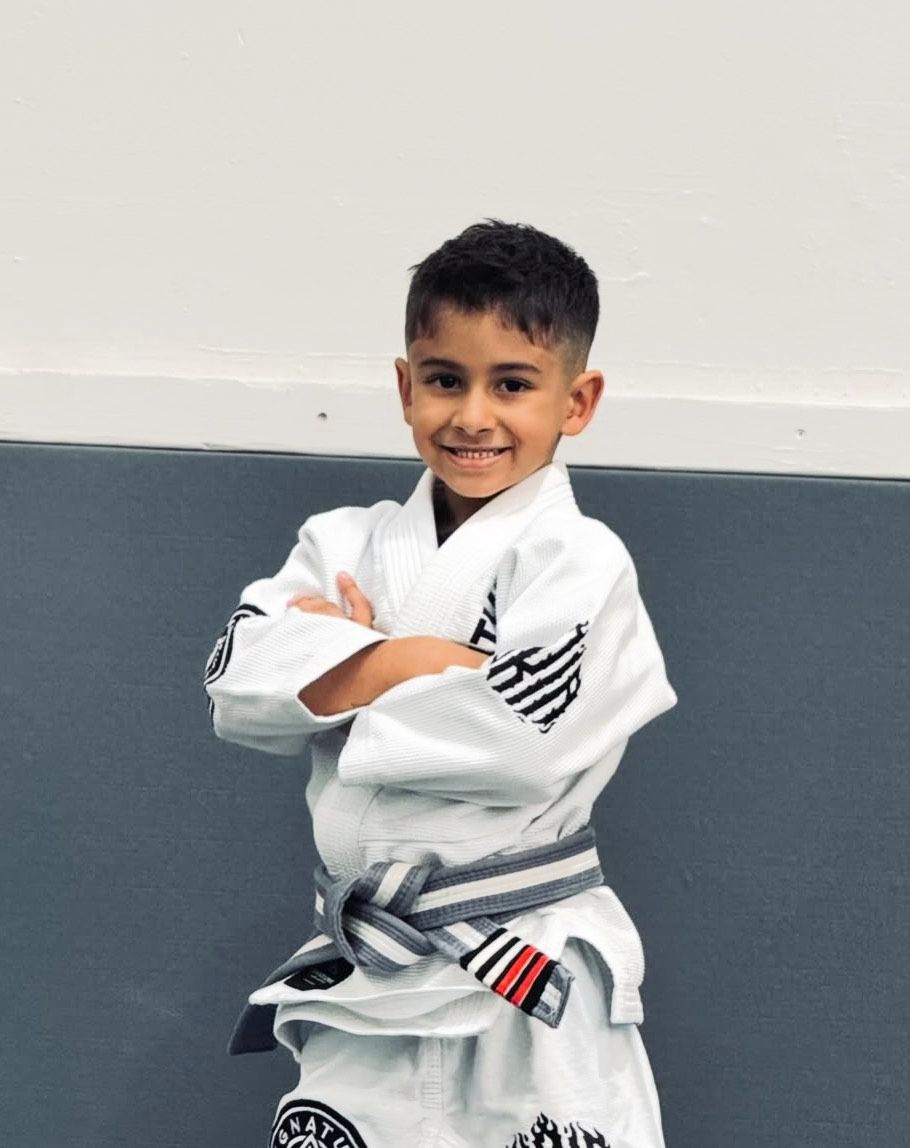
The strongest results in Jiu-Jitsu come from the small, repeatable habits you can actually keep when life in Belmont gets busy.
Jiu-Jitsu looks like a martial art, but the real transformation usually comes from something quieter: consistency. We see it every week in Belmont, where kids, teens, and adults walk in with different goals and different schedules, but improve fastest when training becomes a stable part of their routine instead of an occasional spike of effort.
That matters because most of us are not trying to become professional athletes. You want more everyday strength, better focus, and a calmer response when things get stressful, whether that stress is a tough day at work, a packed family calendar, or just feeling like your energy is scattered.
Our approach keeps it practical and technique-first. In Brazilian Jiu-Jitsu, leverage and strategy matter more than brute force, which makes progress possible for a wide range of ages, body types, and starting points. And because we offer both Gi and No-Gi training, you can choose a format that fits your goals without overcomplicating your first steps.
Why Jiu-Jitsu rewards habits more than intensity
If you only train when motivation is high, progress stays unpredictable. One week you feel great, then you disappear for a while, then you return and feel like you forgot everything. That cycle is normal, but it is also optional.
Jiu-Jitsu is built on timing, balance, and decision-making under pressure. Those qualities are trained through repetition, not random bursts of hard sessions. A simple benchmark we like for beginners is showing up 2 to 3 times per week. That frequency is enough to build momentum and retain what you learned, without pushing you into burnout or unnecessary injuries.
Consistency also improves something people rarely talk about at first: trust in your own reactions. When your body has practiced the same movement patterns often enough, you stop freezing as much. You start seeing situations sooner. You breathe more naturally. That is a big part of “everyday strength,” and it carries over into life outside the mats.
The everyday skills you build before you realize you are building them
When new students think about progress, they often picture learning a long list of techniques. Technique matters, of course, but early success is more about foundational abilities that make learning easier.
Body awareness and calm under pressure
Early-stage training is full of small discoveries: how to move with purpose, how to recognize when you are in danger, and how to avoid panicking. Those may sound basic, but they change everything. Once you can stay calm while someone is applying pressure, you have a usable platform for learning escapes, controls, and submissions safely.
That calm is not just “mental toughness.” It is a skill you practice. You feel pressure, you notice it, you keep breathing, and you work a simple problem. Over time, that same pattern helps in everyday situations: a tense meeting, a traffic-heavy commute, a difficult conversation at home. You do not have to love the moment, but you can stay present inside it.
Technique-first progress (even when you are tired)
Because Brazilian Jiu-Jitsu relies on leverage and strategy, you do not need to be the strongest person in the room to improve. In fact, many students make faster progress once they stop trying to force outcomes and start trying to solve positions.
That shift is a habit. Instead of thinking, “How do I win this round?” you start thinking, “How do I build better frames, better angles, and better timing?” The rounds become information. Your training partners become feedback. And your confidence becomes steadier because it is based on skills you can repeat, not on whether you felt unusually strong that day.
A simple habit framework we teach for everyday strength and focus
We like “simple” because simple survives real life. Here are a few success habits that fit busy Belmont schedules and still move you forward.
The 2 to 3 day training rhythm that keeps you improving
Training 2 to 3 times per week is a sweet spot for most beginners. It creates enough exposure to learn, while giving your body time to recover and your mind time to process. If you have a demanding job or you are coordinating school, sports, and family routines, that rhythm is realistic.
When you train at that frequency, you also start to feel the difference between soreness and injury risk, between normal fatigue and poor sleep, between “I am challenged” and “I am overloaded.” That awareness is a form of strength too, because it helps you stay consistent for months, not just for a short burst.
If you are already active, you can still benefit from that structure. Jiu-Jitsu stresses the body differently than lifting or running. It asks for isometric control, hip movement, grip endurance, and coordination while someone is actively trying to disrupt your balance. Recovery matters, and a steady schedule makes recovery easier to plan.
Your first 10 classes in Belmont: what to focus on (and what to ignore)
Beginners sometimes feel pressure to memorize everything. You do not need to. In the first 10 classes, we want you to build a foundation that makes future learning smoother.
1. Learn how to move on the ground without wasting energy, including basic hip movement and getting comfortable on your back.
2. Learn a few survival priorities, like framing, protecting your neck, and staying connected to position before chasing a submission.
3. Learn how to recognize danger early, so you respond before the position is too far gone.
4. Learn how to stay calm under pressure by breathing and working one step at a time.
5. Learn one or two reliable “go-to” sequences you can repeat, even if they are not perfect yet.
Progress in Jiu-Jitsu often looks like this: you stop panicking, then you start escaping earlier, then you start controlling positions longer, and only then do you feel like you are “doing” the sport. That is normal. It is also a good sign.
Gi vs No-Gi: choosing the format that matches your goals
We offer Gi and No-Gi because each format teaches you something valuable, and different students click with different experiences.
In the Gi, grips slow things down a bit and give you more handles to manage distance and control. Many beginners like that because the pace can feel more structured, and you can clearly feel when a grip changes the situation.
In No-Gi, the game is often faster, with more emphasis on body positioning, underhooks, and movement. It can feel athletic, but it also teaches you to be precise because you cannot rely on fabric grips the same way.
If you are unsure, you do not need to overthink it. You can start where you feel comfortable and build from there. The most important choice is the one that gets you training consistently.
The post-class debrief: a small habit that breaks plateaus
One of the fastest ways to improve is also one of the easiest to skip: reflection. After training, take two minutes before you rush back into the rest of your day. Mentally review what happened, or jot it down in a note on your phone.
A simple post-training debrief might include:
- What worked today, even if it was small
- Where you felt stuck and what position kept repeating
- One detail you want to ask about next class
- One thing you will keep the same next time
- One thing you will simplify, because you were trying too much at once
This habit does two things. First, it helps you learn faster because you are organizing your experience into patterns. Second, it improves your focus because you are training your mind to pay attention, then summarize, then move on. That is a life skill, not just a training skill.
How Jiu-Jitsu habits translate to Belmont life off the mats
We like to be clear about this: training is training. You still have to do the work. But the habits you build in Jiu-Jitsu show up in ordinary moments in surprisingly practical ways.
Better focus at work and school
Jiu-Jitsu forces you to focus on the present problem. You cannot scroll, multitask, or mentally wander when someone is trying to pass your guard. Over time, you get better at locking in for short windows, which is exactly what many people need for work blocks, studying, or even just being more intentional with their day.
That is why we frame progress as “show up and practice,” not “try to be intense.” Intensity is unreliable. Attention is trainable.
More patience and emotional control at home
In training, you will end up in uncomfortable positions. You learn that discomfort is information, not an emergency. That lesson helps at home too, especially for parents and teens navigating busy routines and real emotions. Staying calm does not mean you ignore the situation. It means you can respond with more choice and less impulse.
Stronger, safer movement in everyday life
Everyday strength is not only about muscles. It is also joint awareness, posture, and the ability to move smoothly under load. Jiu-Jitsu trains your hips, core, and balance in a way that often makes people feel more capable doing simple things: carrying groceries, playing with kids, moving furniture, or just feeling less stiff getting up from the floor.
Local FAQ for Jiu-Jitsu in Belmont CA
Do I need to get in shape before I start?
No. Training is where you build conditioning, and our classes are designed to help you scale effort appropriately. You can start where you are, focus on learning, and let fitness improve as a side effect of consistent practice.
Is a Brazilian Jiu-Jitsu class in Belmont realistic for a busy schedule?
Yes, if you treat it like a standing appointment. That is why we talk so much about habits. Two to three classes per week is enough to see progress, and it fits the rhythm of most work and family calendars when you plan it in advance.
What ages do you work with?
We work with kids, teens, and adults, and we adjust the learning environment to match the student. For kids, we emphasize respect, goal-setting, and staying active while having fun. For teens and adults, we balance technique development with conditioning and practical self-defense.
What should I expect in my first class?
Expect to learn fundamental movement, basic positions, and simple goals for the day. You might feel awkward at first, and that is completely normal. Our job is to give you a clear structure so you can learn safely and leave class feeling like you understood something real.
How do I know if I am progressing?
Look for small wins: you breathe more calmly, you recognize positions sooner, you remember one detail from last class, or you escape a bad spot you used to get stuck in. In Jiu-Jitsu, those are big milestones, even if they look quiet from the outside.
Take the Next Step
If you want everyday strength and focus you can actually measure, Jiu-Jitsu is one of the most habit-driven paths we know, and we have built our training environment around that reality. At Signature of Jiu-Jitsu, our Gi and No-Gi programs in Belmont are taught by Professor Atahide “Taidi” Santana, under Master Charles Gracie, with a clear emphasis on technique, strategy, and steady progress.
When you show up consistently, train 2 to 3 times per week, and use a simple reflection habit after class, you give yourself a repeatable system that improves your fitness, your confidence, and your ability to stay calm under pressure. If that sounds like the kind of change you want, we would be glad to help you start.
Build strong grappling fundamentals and refine your technique by joining a Jiu-Jitsu program at Signature of Jiu-Jitsu.