
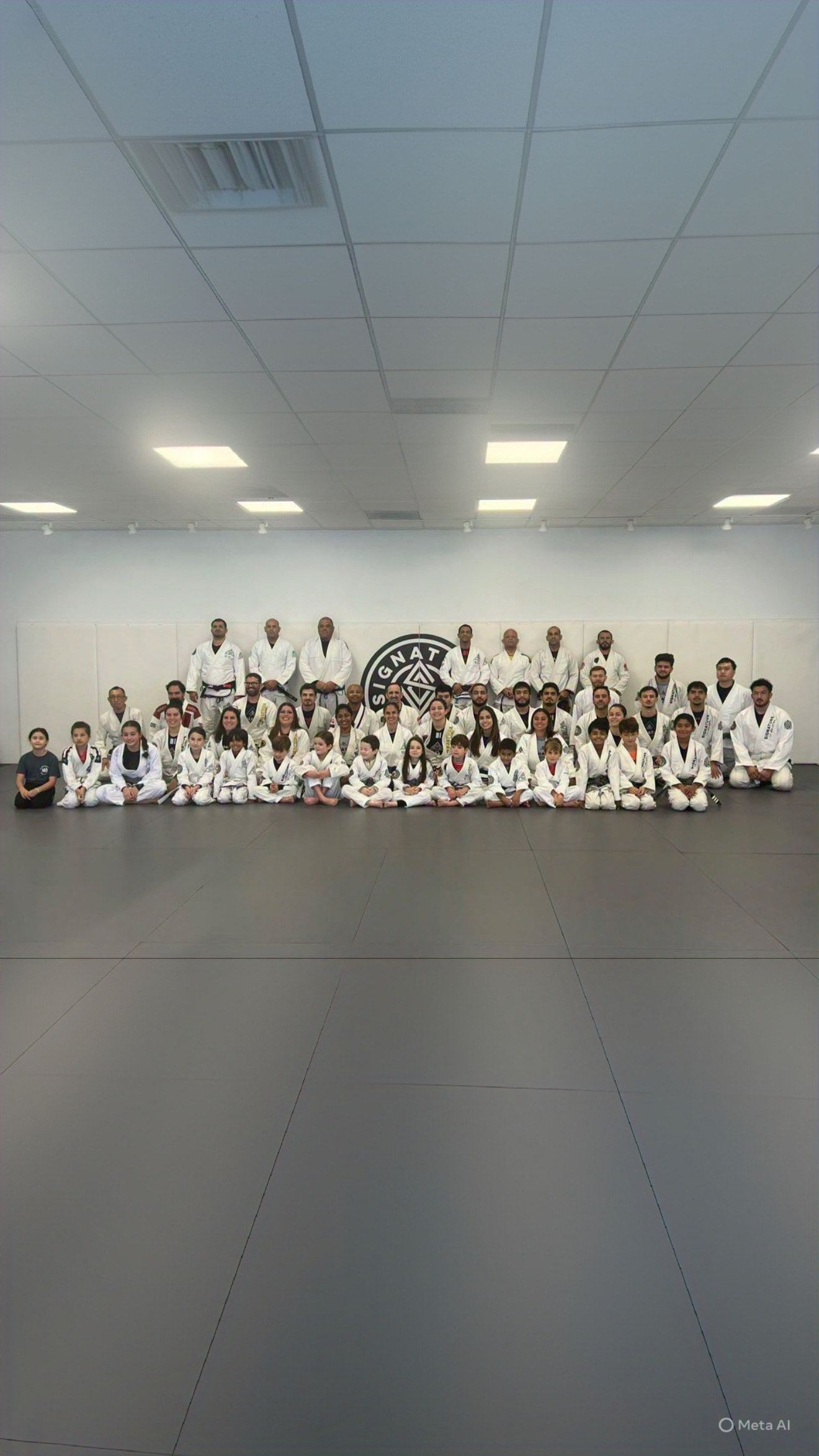
Youth Jiu-Jitsu turns after school energy into focus, confidence, and habits that show up in the classroom.
In Belmont, families juggle a lot: homework, sports, music, long commutes, and the daily question of how to help kids stay motivated when school feels demanding. We built our Youth Jiu-Jitsu program to fit real family schedules while giving kids something deeper than “exercise after school.” We teach a skill set that rewards effort, attention, and self-control, the same ingredients students need to thrive academically.
Youth Jiu-Jitsu is also one of the most practical ways for kids to learn confidence without relying on size or strength. Because the training is based on leverage and positioning, kids start to understand that staying calm and making good choices matters more than being the biggest person in the room. That mindset can quietly change how a child approaches a tough math problem, a group project, or even a frustrating day.
In our Belmont academy, we see this pattern over and over: when kids learn how to handle pressure on the mat, school pressure feels more manageable too. Not perfect, not overnight, but steadily, week by week.
Why motivation changes when progress is measurable
One of the reasons Youth Jiu-Jitsu connects so well to school success is that it makes progress visible. Kids learn a technique, practice it, test it in a controlled way, and then refine it. That loop is basically “study, attempt, get feedback, improve,” which is exactly how learning works in school when it’s working well.
Belt progress and skill milestones also help kids who struggle with motivation. A child may not feel rewarded by long-term goals like “get better grades,” but earning a stripe or mastering a specific escape gives them a near-term target. Over time, those small wins build a more durable kind of confidence: the belief that effort turns into results.
We also coach kids to focus on process, not just outcomes. Instead of “Did you win?” we reinforce questions like “Did you keep trying the right steps?” and “Did you breathe and listen when it got hard?” That’s a subtle shift, but it’s a big deal for students who put a lot of pressure on themselves.
The classroom skills that show up on the mat first
Parents often tell us they’re looking for better focus, better listening, and fewer emotional blowups after school. Those goals are realistic when training is structured, consistent, and age-appropriate. Our classes are designed to teach kids how to follow directions, work with a partner, and stay engaged through the whole lesson.
Here are a few school-related skills we intentionally build through training:
• Focus under distraction, like sticking with a drill even when other pairs are moving nearby
• Respectful communication, including using clear words and practicing safe, controlled contact
• Patience and turn-taking, especially during partner rotations and technique lines
• Emotional regulation, like resetting after a mistake instead of melting down or quitting
• Growth mindset habits, because every student taps, learns, and tries again many times
Those aren’t “extras.” We consider them part of the curriculum, because the technique only works when the mindset supports it.
Calm under pressure is a learnable skill
A lot of kids know the feeling of pressure: timed tests, presentations, social stress, or simply being asked to do too much too fast. On the mat, pressure becomes something we can teach around. Kids learn how to breathe, how to problem-solve, and how to make a plan even when they’re uncomfortable.
Grappling is uniquely good at this because it’s close-contact and technical, but still controlled. When a student is pinned, the solution is not panic. The solution is posture, frames, hip movement, and timing, small steps done in the right order. That approach translates well to schoolwork. Big tasks become smaller steps. Frustration becomes feedback.
For shy kids, this can be especially powerful. We do not force anyone to become loud or aggressive. Instead, we build quiet confidence: the ability to speak up, set boundaries, and trust your own decisions.
Our age-banded Youth Jiu-Jitsu program in Belmont and why it matters
Kids do best when coaching matches their developmental stage. That’s why our Youth Jiu-Jitsu in Belmont is organized into three groups: ages 5 to 7, 8 to 10, and 11 to 14. This structure lets us keep classes safer, more engaging, and more effective because expectations are realistic for the age in front of us.
Ages 5 to 7: structure, listening, and body awareness
In this group, success is often about learning how to be in a class. We teach basic movement patterns, simple grappling concepts, and how to work with a partner respectfully. Kids practice following instructions, waiting their turn, and staying with the group even when they feel wiggly.
From a school perspective, these are huge wins. When a child can line up, listen, and try again after a mistake, teachers notice. Parents notice too, usually during homework time when directions stop feeling like a fight.
Ages 8 to 10: confidence, problem-solving, and consistency
This is the sweet spot for building momentum. Students can handle more detailed technique, and they begin connecting “if-then” decisions: if someone grabs here, then I move there. That’s real problem-solving, and it’s one reason Youth Jiu-Jitsu supports academic growth so well.
We also coach personal responsibility at this age. Kids learn to bring their gear, show up ready, and treat training like something they do, not something that happens to them. That shift can improve study habits and routines at home because kids start seeing themselves as capable and accountable.
Ages 11 to 14: resilience, leadership, and healthy independence
Middle school years can be intense, socially and academically. Our older youth classes give students a place to work hard, be challenged, and see direct results from consistent effort. We emphasize smart training, safe partner work, and the idea that toughness is often quiet: it’s showing up, learning, and staying respectful.
Students in this age group also benefit from leadership opportunities. Being a good partner, helping newer kids understand a drill, and modeling control are ways preteens build confidence without needing to be the “loudest” person in the room. That kind of leadership often carries into group projects and classroom participation.
Self-defense that supports confidence without encouraging conflict
Parents want practical self-defense, and we understand why. Our approach to Brazilian Jiu-Jitsu in Belmont is built around real-world principles: leverage, positioning, and control. Kids learn how to protect themselves, escape holds, and create space, skills that matter if a situation becomes physical.
At the same time, we treat self-defense as part of a bigger character lesson. We coach kids to avoid conflict, use their voice, and get help from trusted adults. Training gives them options, and options reduce fear. When kids feel less afraid, they often walk through school hallways differently, calmer posture, better eye contact, less reactive energy. That alone can reduce bullying behavior aimed at them.
Safety, beginner comfort, and what your first weeks look like
Starting something new can feel intimidating for kids and for parents. We keep the onboarding process simple and supportive. New students learn the basics first: how to move safely, how to tap, how to work with partners, and how to listen for coach cues that keep training controlled.
We also keep sparring appropriate for age and experience. Beginners are guided closely, and we pair students thoughtfully. The goal is skill-building, not chaos. Most kids adjust faster than parents expect, especially when they realize they are not “behind.” Everyone starts at zero at some point.
If your child is sensitive to loud environments, shy with new groups, or nervous about contact, let us know. We can help you choose the best class time and ease the transition so the first experience feels manageable.
How often should your child train for school success
Belmont families are busy, so frequency needs to be realistic. For most kids, consistency matters more than intensity. We typically see the best results when students train two to three times per week. That schedule is frequent enough to build skill and routine, but not so heavy that schoolwork suffers.
If your child is brand new, starting with two classes per week is a strong baseline. After a few months, some students add a third day when they feel more confident and want faster progress. If your child is involved in other sports, two days can still work well, especially during a busy season.
A simple rule we share with parents is this: training should leave your child feeling better regulated, not more exhausted and overwhelmed. When the balance is right, homework time often becomes smoother.
Competition versus recreation and why both paths build motivation
Not every child wants to compete, and that’s completely fine. Youth Jiu-Jitsu works well as a recreational program because it gives kids fitness, confidence, and structure. For motivated students, the sport also has a clear competitive pipeline. Large youth tournaments draw hundreds of young athletes, which shows how organized and active the community has become.
We support both directions. Some kids love the idea of testing themselves in competition because it gives them a concrete goal. Others prefer to progress through belts and personal milestones without the stress of a tournament. Either way, the same habits develop: practice, patience, and resilience.
How to know if your child is ready to start
Most kids ages 5 to 14 can start, even if they have never done a sport before. Readiness is less about athletic ability and more about willingness to participate in a structured class.
A few good signs include:
1. Your child can follow simple instructions for short stretches, even if reminders are needed
2. Your child can handle gentle partner work with coaching and clear boundaries
3. Your child benefits from physical activity to regulate mood and attention after school
4. Your child is curious about learning skills, not just “burning energy”
5. Your family can commit to a consistent weekly routine for at least a couple months
If you’re unsure, that’s normal. The easiest way to find out is to try a class and see how your child responds to the environment.
Take the Next Step
Building school-ready habits does not require a lecture or another worksheet. It takes a setting where effort is rewarded, emotions are coached, and progress is real. That’s exactly what we aim for every day, and it’s why so many Belmont families use training as an anchor during the school year.
When you are ready to explore Youth Jiu-Jitsu with a team that understands both child development and real Brazilian Jiu-Jitsu, we would love to welcome you. At Signature of Jiu-Jitsu, our kids program is structured by age, taught with care, and designed to help your child grow on the mat and beyond it.
See what makes training at Signature of Jiu-Jitsu unique by joining a class today.