
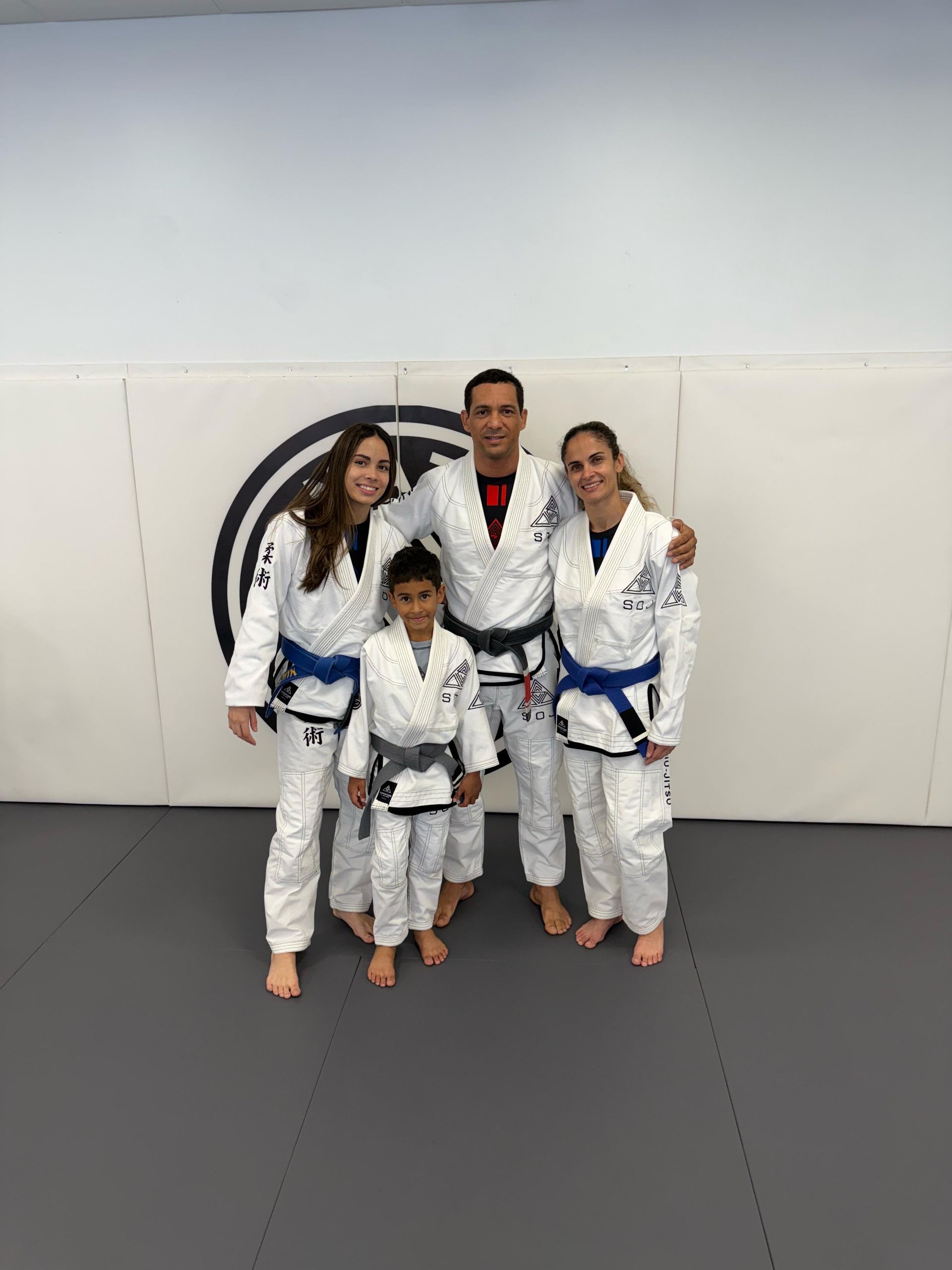
Youth Jiu-Jitsu gives kids a place to practice courage and cooperation every single week.
Parents usually start with a simple question: will my child actually stick with this? Youth Jiu-Jitsu tends to work because progress is tangible, class to class, even for beginners who feel unsure at first. A new student might start by learning how to move safely on the mat and, a few weeks later, realize your child is volunteering for partner drills without being nudged.
In our Belmont program, we focus on more than techniques. We teach kids how to handle small challenges, communicate clearly, and reset after mistakes, which is a big deal at ages when emotions can swing fast. Youth Jiu-Jitsu in Belmont is not about turning every child into a fearless extrovert. It is about giving your child steady reps in confidence and teamwork, in a way that feels structured and supportive.
Because Jiu-Jitsu is partner-based, it naturally creates moments where kids must cooperate to learn. That shared responsibility is where a lot of growth happens, and it shows up in the way students speak to one another, listen to coaching, and start taking pride in being a good teammate.
What Youth Jiu-Jitsu actually teaches your child
Brazilian Jiu-Jitsu is often described as a problem-solving martial art. Instead of relying only on strength, students learn leverage, positioning, timing, and how to make smart choices under pressure. For kids, that translates into learning how to slow down and think, even when something feels difficult.
In class, we teach clear fundamentals: movement, balance, posture, escapes, and positional control. We also teach the habits that make training work: taking turns, paying attention, being safe with partners, and treating the mat like a shared space. Those habits matter as much as any single technique because they shape how children show up in a group.
Youth Jiu-Jitsu also gives kids a way to measure improvement without needing to be the fastest runner or the biggest athlete. When a child learns to escape a position that used to feel impossible, the confidence is earned. It lands differently than praise that is disconnected from effort.
How confidence grows one small challenge at a time
Confidence is not something we can hand a child in one class. It is built through repeated experiences where your child tries, struggles a bit, gets feedback, and tries again. That process is simple, but it is powerful when it happens consistently.
A typical confidence-building arc in Youth Jiu-Jitsu looks like this. First, a child learns a basic movement and feels awkward, which is normal. Next, your child repeats it enough times that it starts to feel familiar. Then your child uses it with a partner, realizes it works, and suddenly the child is standing a little taller.
We also keep goals reachable. Instead of overwhelming kids with complicated sequences, we focus on one concept at a time. That might be a basic escape, a simple guard position, or how to keep balance while moving. When kids can succeed at a specific task, the next challenge feels less intimidating.
We also care about how kids talk to themselves after mistakes. A child who learns to say, I will try again, is developing a skill that carries into school, friendships, and anything else that asks for persistence.
What confidence can look like outside the academy
Families often notice confidence in everyday moments, not in big speeches. Your child may become more comfortable asking questions. Your child may handle losing a game without spiraling. Your child may stop quitting when something feels hard.
Youth Jiu-Jitsu in Belmont can support those outcomes because the mat is full of safe difficulty. Kids learn that discomfort is part of learning, not a signal to stop. And because the environment is structured, kids can practice that lesson again and again.
Why partner training develops real teamwork
Jiu-Jitsu is an individual sport practiced with other people, which creates an interesting dynamic. Your child improves personally, but your child cannot improve alone. Training partners are not opponents in the usual sense. Partners are teammates for learning.
Teamwork in Youth Jiu-Jitsu shows up in small, practical ways. Kids learn to match intensity with a partner. Kids learn to pause and reset when something gets messy. Kids learn to listen when a partner says stop, and kids learn to speak up when something does not feel right.
That kind of cooperation is not abstract. It is built into every drill. Even the act of taking turns teaches patience and consideration, especially for kids who are used to wanting the first spot in line.
Here are a few teamwork skills kids practice constantly in our classes:
- Communicating clearly with a partner about what drill comes next and what pace feels safe
- Respecting boundaries by stopping immediately when a partner taps and resetting without argument
- Sharing mat space by staying aware of others, moving safely, and avoiding collisions
- Encouraging classmates by offering simple support like good job or helping someone remember a step
- Accepting coaching by making adjustments without getting defensive, even when it feels frustrating
When kids repeat these behaviors week after week, teamwork becomes normal. It stops being something we lecture about and starts being something they do.
Age-specific classes that meet kids where they are
Kids develop fast between five and fourteen. Attention span, body awareness, social confidence, and emotional regulation can look completely different year to year. That is why we separate our youth program into age groups: 5 to 7, 8 to 10, and 11 to 14.
In our youngest group, we use more games and simple movements to build coordination and listening skills. The goal is not perfection. The goal is participation, safety, and positive experiences with partners. For ages 8 to 10, kids can handle more detailed technique and longer drills, but they still benefit from variety and clear structure. For ages 11 to 14, we can layer in more complex problem-solving and more responsibility in partner work.
This approach matters for confidence and teamwork because it reduces comparison. A five-year-old does not need to feel outmatched by a teenager. And an older student does not need to feel held back by activities that are not age-appropriate. In each group, we can teach at the right pace and keep expectations clear.
Safety, boundaries, and emotional support on the mat
Parents should ask about safety. We welcome that. Youth Jiu-Jitsu is a contact activity, and the way it is taught makes all the difference. Our classes are structured, supervised, and designed for kids, not mini adults.
A big part of safety is teaching children how to stop. We teach tapping early, listening to taps immediately, and resetting without pushing. We also reinforce consent-based habits: partners communicate, coaches supervise, and kids learn that safe training is the only kind of training we do.
We also pay attention to emotional safety. Kids can feel embarrassed when they make mistakes. Kids can get frustrated when something does not click. We coach those moments directly. Instead of treating frustration like a problem, we treat it like part of learning and show kids how to breathe, reset, and re-engage.
How we keep training controlled
We use clear routines so kids know what to expect. We match partners thoughtfully, especially for new students or kids who are cautious. We keep techniques age-appropriate and focus on control and positioning. When kids learn control, they learn respect, and the room feels calmer.
We also encourage good hygiene and personal responsibility. Clean uniforms, trimmed nails, and water breaks might sound basic, but those habits support a healthy training environment and teach kids to care for the group, not just themselves.
What your first class can feel like
The first day matters. For some kids, walking onto the mat is exciting. For others, it can feel like stepping into a new world with new rules, new faces, and a lot of movement. We plan for that.
A first class usually starts with a quick orientation and a warmup that introduces how we move on the mat. Then we teach a simple technique or concept and give kids time to practice with a partner. We also include game-like drills, especially for younger groups, because games help kids learn without overthinking.
New students often need a couple of classes to feel fully comfortable. That is normal. We look for small wins: joining the line without hesitation, making eye contact with a partner, trying the movement one more time. In Youth Jiu-Jitsu, those small wins add up.
If your child is shy, we can ease the pace. We can start with simple partner work and build from there. The point is not to force confidence. The point is to let confidence grow through repeated positive experiences.
Who benefits most and who may need a slower introduction
Youth Jiu-Jitsu in Belmont can be a great fit for many kids, including beginners who have never played organized sports. Athleticism is not a requirement. What matters more is willingness to participate and a readiness to follow safety rules.
Kids who often do well include children who want a structured outlet after school, kids who enjoy problem-solving, and kids who benefit from clear routines. We also see kids who are hesitant at first but warm up once they realize the room is supportive and predictable.
Some kids may need a slower introduction, and that is okay. If your child is very anxious, sensory-sensitive, or easily overwhelmed, it helps to talk with us first so we can suggest the best class group and pacing. We do not make medical promises, but we can offer structure, clear expectations, and a patient approach.
Common questions parents ask about Youth Jiu-Jitsu
Is Youth Jiu-Jitsu safe for kids?
No sport is risk-free, but we reduce risk through supervision, age-appropriate instruction, partner matching, controlled drilling, and clear tapping rules. Safety is a skill we teach, not just a rule we post.
What age can my child start?
Our youth program serves ages 5 to 14, organized into three age groups so kids train with peers at similar developmental stages.
Does my child need to be athletic or tough?
No. Many kids start without any sports background. We build basic movement skills first, then add technique and partner awareness over time.
Will training make my child more aggressive?
Our focus is respect, control, and responsibility. Kids learn how to manage energy, follow rules, and keep partners safe, which is different from aggression.
Does my child have to compete?
Competition is optional. Many families train for confidence, fitness, social growth, and practical self-defense skills without any tournament pressure.
How often should my child attend?
Consistency matters more than intensity. A schedule that your family can maintain, week after week, usually creates the best results and the happiest students.
Take the Next Step with Signature of Jiu-Jitsu
When Youth Jiu-Jitsu is taught with structure, age-appropriate coaching, and a strong culture of respect, it becomes more than an activity. It becomes a place where kids practice confidence in real time and learn teamwork through daily habits, not speeches. That is the heart of what we build on the mat in Belmont.
If you want a program that serves ages 5 to 14 with clear groupings, positive reinforcement, and partner-based learning that emphasizes safety and communication, you will feel at home at Signature of Jiu-Jitsu. We would love to help your child get started at a pace that feels right.
Take what you learned here to the mats by joining a Jiu-Jitsu class at Signature of Jiu-Jitsu.