
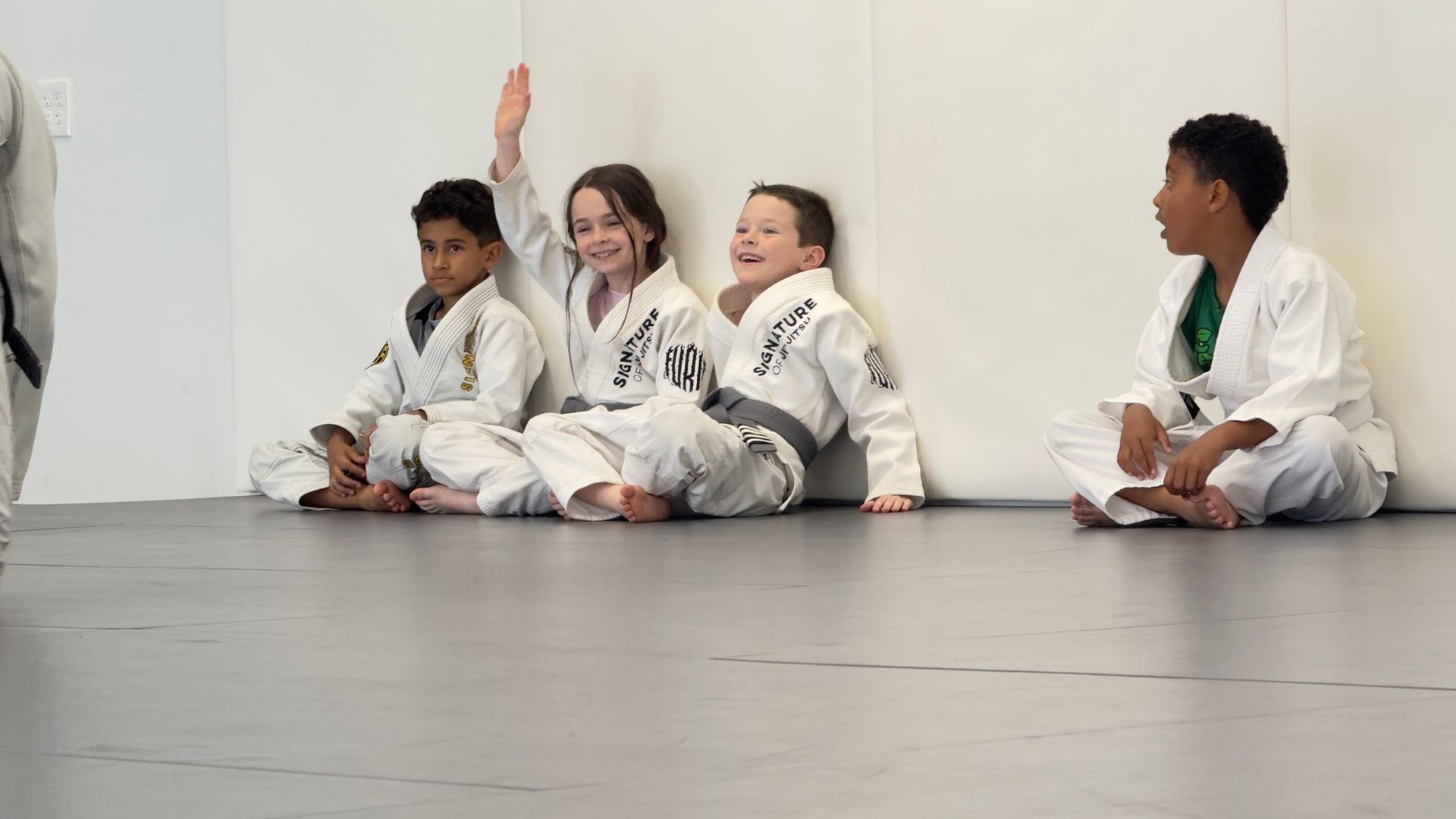
Youth Jiu-Jitsu can look like a sport from the outside, but on the inside it often feels like a moving mindfulness practice.
In Belmont, many families are looking for something that helps kids burn energy while also building focus, emotional balance, and confidence. That combination is exactly why Youth Jiu-Jitsu keeps growing. When kids train consistently, they are not only learning techniques, but also learning how to notice what is happening in their body and mind in real time.
We see mindfulness and self-awareness develop in surprisingly practical ways: how a child breathes when something feels hard, how quickly someone resets after a mistake, and how calmly a student problem-solves when a partner changes the situation. Those small moments add up, and over time they show up at home and at school, too.
Youth Jiu-Jitsu in Belmont works especially well because the art demands presence. You cannot drift off mentally when you are trying to maintain balance, control distance, and respond safely to a training partner. The mat gives kids a clear, structured place to practice being here, right now, without a lecture or a worksheet.
Why mindfulness shows up naturally in Youth Jiu-Jitsu
Mindfulness is often explained as paying attention on purpose, in the present moment, without overreacting. That sounds simple until you watch how quickly a child’s mind can jump to frustration, embarrassment, or “I can’t do this.” Youth Jiu-Jitsu gives those thoughts somewhere to land and then move through.
Because Brazilian Jiu-Jitsu is strategic and close-range, students get immediate feedback. If posture slips, balance changes. If breathing gets rushed, energy fades. If emotions spike, decisions get sloppy. The training itself becomes a kind of mirror, and that mirror helps kids build self-awareness without being harsh about it.
Another reason mindfulness develops here is the pace. Even when class is energetic, we guide students through clear steps: learn a movement, drill it with control, then practice it with a little more realism. That progression quietly teaches kids how to slow down mentally, follow directions, and stay engaged through a full process.
Building body awareness: the foundation of self-awareness
A big part of mindfulness for kids is simply noticing their body. Youth Jiu-Jitsu develops that in a hands-on way, and it tends to click faster than people expect.
Learning where your body is in space
In Brazilian Jiu-Jitsu in Belmont, children constantly practice spatial awareness: where their hips are, where their hands should frame, how far their knees are from their chest, and what happens when they turn a few inches the wrong way. This is not trivia, it is safety and success in one.
As body awareness improves, kids start anticipating rather than reacting late. You will see it in small wins: a student recognizes a sweep is coming, keeps a base, and stays calm instead of panicking. That calm is mindfulness in motion, built through repetition.
Feeling pressure without rushing into panic
Pressure is part of grappling, but class should never be chaos. Controlled training teaches kids to notice sensation and respond with technique. That one skill translates surprisingly well to everyday stress. If a child learns, “This feels intense, but I can breathe and make a decision,” that is self-awareness with real-world value.
Breath, focus, and present-moment attention in every class
Most kids do not need a long meditation session to benefit from mindfulness. They need a structured activity that makes focus necessary. Youth Jiu-Jitsu does that naturally because attention is part of the technique.
We cue kids to breathe during drills, especially when learning something new or when working from a tight position. Breathing helps the body stay relaxed enough to move well, but it also gives the mind an anchor. When a student is overwhelmed, returning to the breath gives a simple next step.
Over a few weeks of consistent training, many parents notice changes that are easy to miss at first:
- Kids fall asleep a bit faster because their body and mind feel “spent” in a healthy way
- Focus improves during homework because attention has been practiced under pressure
- Mood steadies out because movement and skill-building reduce pent-up stress
That is not magic. It is the combination of endorphins, structure, and the constant requirement to stay present.
Emotional regulation: staying calm while things get difficult
Emotional regulation is one of the biggest benefits of Youth Jiu-Jitsu, and it is also one of the most misunderstood. Kids do not become calm because we tell them to calm down. Kids become calm because they practice staying composed while something is challenging.
In training, students learn what it feels like to be stuck, to try something that does not work, and to reset without melting down. We coach those moments carefully because that is where growth happens. A child who can pause, breathe, and try again is developing a skill that matters far beyond sports.
Controlled sparring teaches real-time decision-making
When kids roll in a supervised, age-appropriate way, the goal is not to “win.” The goal is to learn. That learning includes managing adrenaline, using technique instead of force, and respecting a partner’s safety.
Over time, students start recognizing emotional patterns in themselves:
- “I rush when I feel pressure.”
- “I hold my breath when I’m nervous.”
- “I get frustrated when I can’t do it perfectly.”
Naming those patterns is self-awareness. Practicing a better response is mindfulness.
Discipline and critical thinking: the strategic side of the art
Brazilian Jiu-Jitsu is sometimes called “human chess,” and for kids that strategy becomes a powerful way to build focus. Youth Jiu-Jitsu rewards patience, timing, and problem-solving more than raw strength, which is good news for children of all sizes and personalities.
We teach students to think in simple, repeatable frameworks: protect yourself first, improve position second, and only then look for a submission. That structure helps kids organize their decisions. It also teaches them that emotions do not have to drive actions.
How kids learn to solve problems instead of freezing
A common moment in Youth Jiu-Jitsu in Belmont is a student getting stuck under a partner and wanting to quit. We do not shame that feeling. We give a plan. Small steps create momentum, and momentum creates confidence.
Here is a practical example of the kind of thinking we coach during class:
1. Pause and breathe, even one calm breath helps
2. Build frames with your arms to create space safely
3. Move your hips to a stronger angle instead of pushing straight
4. Recover guard or get to your knees step by step
5. Reset and try again, even if it is not perfect yet
That sequence is technical, but it is also mindfulness: notice, regulate, act with intention.
Confidence and self-esteem that feels earned
Confidence is a common reason parents look into Youth Jiu-Jitsu, but we focus on the kind of confidence that comes from effort and consistency. Kids feel proud when they remember a detail, help a teammate, or stay composed through something hard.
Belt progression supports this because it gives clear milestones. But the deeper confidence comes from daily practice. A child learns, “If I show up and try, I improve.” That lesson is simple, and it sticks.
We also see self-esteem improve because students learn healthy boundaries. They experience what it feels like to say “tap” and be respected immediately. That reinforces body autonomy in a way kids can understand without a big speech.
Support for focus challenges, including ADHD and impulse control
Many Belmont families ask whether Youth Jiu-Jitsu helps with focus or ADHD. While every child is different, Brazilian Jiu-Jitsu in Belmont is well-known for strengthening attention and impulse management because the training environment naturally rewards self-control.
Kids get frequent, immediate feedback. If a student moves too fast without listening, the technique fails. If someone stays patient and follows steps, the technique works. That cause-and-effect loop is powerful for children who struggle with impulse control.
We keep expectations clear and consistent. Kids learn when to be explosive and when to be still, when to speak and when to listen. That rhythm can become a steadying influence during the week, especially when school feels demanding.
What you can expect in our Youth Jiu-Jitsu program
Parents often want to know what a class actually feels like. The short answer is: structured, active, and supportive. We keep safety and respect at the center, and we aim for progress that is noticeable without being overwhelming.
Our Youth Jiu-Jitsu classes typically include:
- A warm-up that builds coordination and prepares joints and muscles for movement
- Technique instruction with clear details and age-appropriate language
- Partner drilling to build repetition, timing, and confidence
- Games or structured movement challenges that keep learning fun and focused
- Supervised sparring or positional training to practice calm decision-making
This is where mindfulness grows. Kids learn to pay attention to instructions, to their breathing, and to their partner’s movement, all while staying respectful and safe.
How often should your child train to feel the benefits?
Consistency matters more than intensity. For most kids, training 2 to 3 times per week is a sweet spot for improvement in skill, confidence, and emotional regulation. That said, even once per week can create meaningful change, especially in mood, sleep, and focus after a few weeks.
If your schedule is busy, we recommend starting with a pace your child can maintain. A steady routine helps mindfulness because it gives kids a familiar place to practice self-awareness week after week.
To make that routine easier, we encourage you to check the class schedule page before your first visit so you can choose times that feel realistic for your family.
Everyday mindfulness tools your child can use at home
Youth Jiu-Jitsu works best when kids have a couple of simple tools they can use off the mat. We keep these practical, because kids will actually do them.
Here are a few options families in Belmont often like:
- Box breathing: inhale 4 seconds, hold 4, exhale 4, hold 4, repeat for 3 to 5 rounds
- A two-minute “body scan” at bedtime: notice feet, legs, belly, shoulders, jaw, then relax each
- A quick reset phrase: “Breathe, frame, move,” which mirrors the calm steps used in training
- A reflection question after class: “What was one thing I did better today than last time?”
None of this needs to be perfect. The point is to help your child notice what is happening and choose a response.
Take the Next Step
Mindfulness and self-awareness are not abstract ideas in our academy, they are skills kids practice through movement, decision-making, and respectful training. When your child trains Youth Jiu-Jitsu consistently, the benefits tend to show up in calmer reactions, sharper focus, better resilience, and a more grounded sense of confidence.
If you want a program in Belmont that treats Brazilian Jiu-Jitsu as both a sport and a tool for personal growth, we would love to help you get started at Signature of Jiu-Jitsu with a clear plan and a supportive pace.
Ready to train? Join a Brazilian Jiu-Jitsu class at Signature of Jiu-Jitsu today.