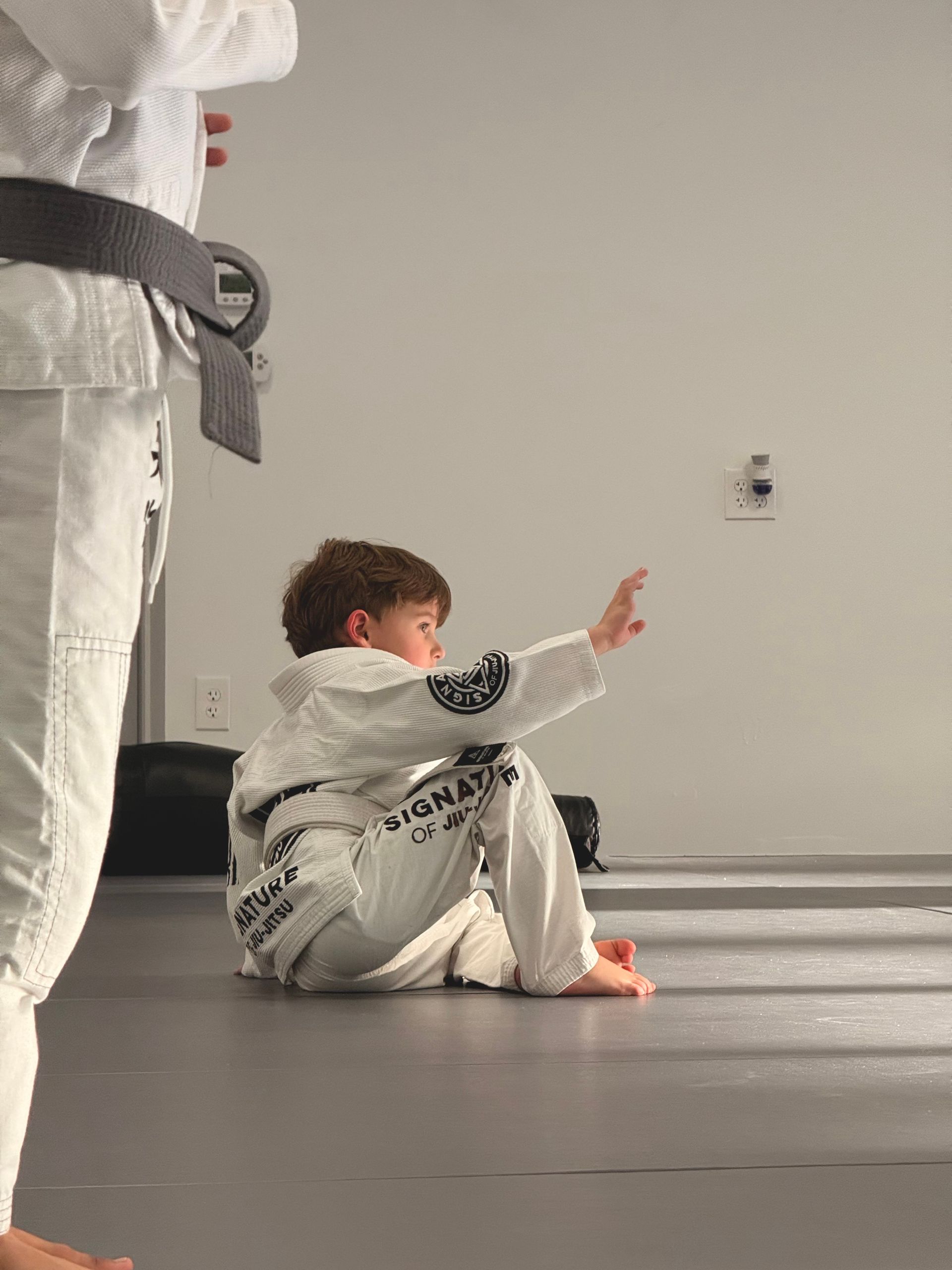
Youth Jiu-Jitsu turns nervous energy into calm confidence, one small win at a time.
Belmont parents tell us the same thing in different ways: you want an after school activity that builds real confidence, not just burns off steam for an hour. Youth Jiu-Jitsu checks that box because kids can feel themselves getting better quickly, even when they start out shy, wiggly, or unsure.
In our classes, confidence is not a pep talk. It is earned through practice that makes sense for a child’s age, attention span, and body awareness. That is why our Youth Jiu-Jitsu program is organized into clearly separated age groups: 5 to 7, 8 to 10, and 11 to 14. When kids train with peers who move and learn at a similar pace, the room feels safer, more fun, and less intimidating.
Youth Jiu-Jitsu in Belmont also fits local family life. You get a nearby, structured program that teaches focus and self control, with a clear progression kids can track. And yes, you will probably notice changes at home: better posture, better listening, and a little more resilience when something feels hard.
Why Youth Jiu-Jitsu builds confidence faster than you might expect
Confidence grows when kids solve problems under gentle pressure, then realize they can do it again. Jiu-Jitsu is built for that. Instead of relying on size or speed, kids learn leverage, timing, and decision making. A smaller student can use the right angle and grips to escape. A high energy student can learn to slow down and be precise. Those moments add up.
We also keep confidence grounded in respectful habits. Kids learn how to greet partners, follow instructions, and keep control of their bodies. That might sound simple, but it is huge for self esteem. When your child learns to be safe with another person’s body, your child starts to feel capable and trustworthy.
On the sport side, Youth Jiu-Jitsu is growing quickly across the country, and that growth shows in the way youth events are organized and tracked. Large tournaments produce hundreds of youth gold medalists, and major match databases list hundreds of thousands of recorded matches. Even if your family never plans to compete, that level of organization signals something parents appreciate: structured learning, clear rules, and measurable progress.
Our age specific classes: 5 to 7, 8 to 10, and 11 to 14
One of the biggest reasons kids stick with Jiu-Jitsu is that the class feels like it was made for them. We do not run a single mixed kids group and hope it works out. We separate Youth Jiu-Jitsu into three age bands because younger children and preteens learn differently, emotionally and physically.
Ages 5 to 7: confidence through movement, games, and simple wins
At 5 to 7, kids are learning how to learn. We focus on listening, lining up, taking turns, and moving safely in a group. You will still see real Jiu-Jitsu, but it is delivered in a way that feels like play with a purpose. We use drills that build balance, coordination, and basic grappling positions without overwhelming details.
This age group is also where we lay the foundation for good partner habits: gentle grips, controlled movement, and stopping when asked. That is a major piece of safety and a major source of confidence.
Ages 8 to 10: skill building, structure, and friendly challenge
At 8 to 10, kids can follow multi step directions and start connecting techniques into sequences. Our coaching becomes more detailed, but still very approachable. Students practice fundamental positions, escapes, and controls, and we help them understand why a technique works, not just how to copy it.
This is often the sweet spot where parents notice growth outside the mats. Kids start showing more patience, more follow through, and a better ability to handle small frustrations without melting down.
Ages 11 to 14: real problem solving, fitness, and social confidence
Ages 11 to 14 is where kids want training that feels real. We build on fundamentals and add more strategy, conditioning, and situational sparring. Students learn to stay composed with a partner who is resisting, which is a powerful confidence builder for middle school and early high school years.
This group also benefits from the social side of training. Youth Jiu-Jitsu in Belmont can be a steady place to show up, work hard, and build friendships around a shared challenge. It is not loud confidence. It is the quiet kind that shows up when your child raises a hand in class or tries out for something new.
Is jiu-jitsu safe for young children?
Safety is a fair question, and you should ask it. Jiu-Jitsu is a contact sport, but it is also one of the most controlled martial arts environments when it is coached well. Our classes emphasize tap awareness, controlled movement, and partner respect from day one. We match students by age and experience, and we keep the room structured so kids are not improvising risky moves.
We also teach kids to fall, base, and move in ways that protect the head and joints. That kind of body awareness pays off beyond training. Kids learn how to be coordinated in motion, which can help in everyday play and school sports.
A helpful detail from the broader youth competition scene is that many youth matches end by submission, not by points, and one major youth event reported around a 50 percent submission rate across hundreds of matches decided by fighting. That might sound intense, but it actually highlights a key safety concept: submissions in Jiu-Jitsu are designed to be controlled and stopped immediately. Kids learn to tap early and release quickly. Done correctly, control is the rule, not the exception.
What your child will learn in Youth Jiu-Jitsu in Belmont
Parents often ask if kids will learn self defense or if it is only sport technique. Our answer is simple: the fundamentals are both. Positioning, escapes, balance, and control matter in real life, and they also matter in training.
Here are a few outcomes we build intentionally:
• Listening and following directions under mild pressure, so your child learns focus without fear
• Body awareness and coordination, including how to move, base, and fall safely
• Respect and self control, such as stopping on command and caring for training partners
• Practical grappling fundamentals, including escapes from common holds and control positions
• Confidence through repetition, because skills become reliable when kids practice consistently
• Healthy effort habits, where kids learn that progress comes from showing up and trying again
That last point matters. Youth Jiu-Jitsu rewards persistence. Your child does not need to be the fastest or the loudest. Your child just needs to keep learning.
Why kids love it: progress you can see and feel
Kids love getting better at something that feels like a real skill. Jiu-Jitsu is full of tiny milestones that arrive quickly: a clean breakfall, a smart escape, a sweep that finally works, a moment of calm during sparring. Those wins are concrete.
We also keep classes engaging. Training is structured, but it is not boring. The room has energy, and there is a sense of teamwork. Kids cheer each other on, and the social bonds form naturally because partners help each other improve.
Progress is also visible in a way that makes sense to kids. Our youth program uses clear goals, and kids can feel the difference between their first month and their third. That feedback loop is a big reason Youth Jiu-Jitsu becomes the activity kids ask to go to, not the one you have to negotiate.
How often should your child train each week?
Consistency beats intensity, especially for kids. For most families, two classes per week is a strong starting point. It gives your child enough repetition to remember techniques and build confidence without feeling overloaded.
From there, you can adjust based on your child’s personality and schedule. Some kids love routine and want more mat time. Some do better with a steady pace and plenty of recovery. Either way, you will see the best results when training is consistent and supported at home with good sleep and nutrition. Nothing fancy, just the basics.
If you want specifics, the class schedule page is the best place to match training days to school and activity calendars.
A simple first class checklist for parents
Starting anything new can feel big for a kid, and honestly, for parents too. We keep the first class welcoming and beginner friendly, and a little preparation makes it smoother.
1. Check the class schedule and choose the age group that matches your child: 5 to 7, 8 to 10, or 11 to 14
2. Arrive a bit early so your child can settle in, meet the coach, and see the space
3. Dress comfortably, and if you do not have a uniform yet, wear athletic clothes that allow movement
4. Set one small goal, like listening well or trying every drill, instead of trying to be perfect
5. After class, ask what was fun and what felt tricky, then celebrate effort over outcomes
If your child is nervous, that is normal. We see it all the time. The nerves usually fade once kids realize everyone is learning, and the room is structured.
Youth Jiu-Jitsu and confidence for shy kids and high energy kids
Some activities reward the loudest or most aggressive kids. Youth Jiu-Jitsu is different. Shy kids often do well because the structure gives them a role and a clear set of steps. They learn how to make contact in a safe, respectful way, which can translate into stronger social confidence.
High energy kids benefit because the training channels energy into technique and control. Instead of bouncing off the walls, kids learn to breathe, pay attention, and move with purpose. Over time, you will notice that the same kid who struggled to sit still can focus deeply when the goal is clear.
This balance is one reason families searching for Jiu-Jitsu in Belmont CA keep coming back to the idea of grappling as problem solving. Kids are not just exercising. Your child is learning how to think, adjust, and stay composed.
What about competition?
Competition is optional. We treat it as one possible path, not the purpose of training. For some kids, a tournament becomes a motivating goal and a fun way to test skills. For others, the best win is simply becoming more confident in daily life.
If your child does want to explore competition later, Youth Jiu-Jitsu provides a strong foundation because the sport is organized by age and skill. Nationally, youth events are large and well structured, and the amount of match data being recorded shows how active the community is. We use that same mindset in class: clear rules, clear progress, and coaching that meets your child where your child is today.
Take the Next Step
Building confidence is not about finding a magic activity. It is about finding a place where your child feels safe, challenged, and supported enough to grow. That is what we aim to deliver every day, with Youth Jiu-Jitsu classes designed around age appropriate coaching and steady progress.
When you are ready, Signature of Jiu-Jitsu is here in Belmont with youth classes for ages 5 to 14, separated into 5 to 7, 8 to 10, and 11 to 14. If you want a program your child can stick with, and a skill set your child can carry into school and life, we would love to meet you.
Become part of a supportive community dedicated to growth, respect, and continuous improvement at Signature of Jiu-Jitsu.