
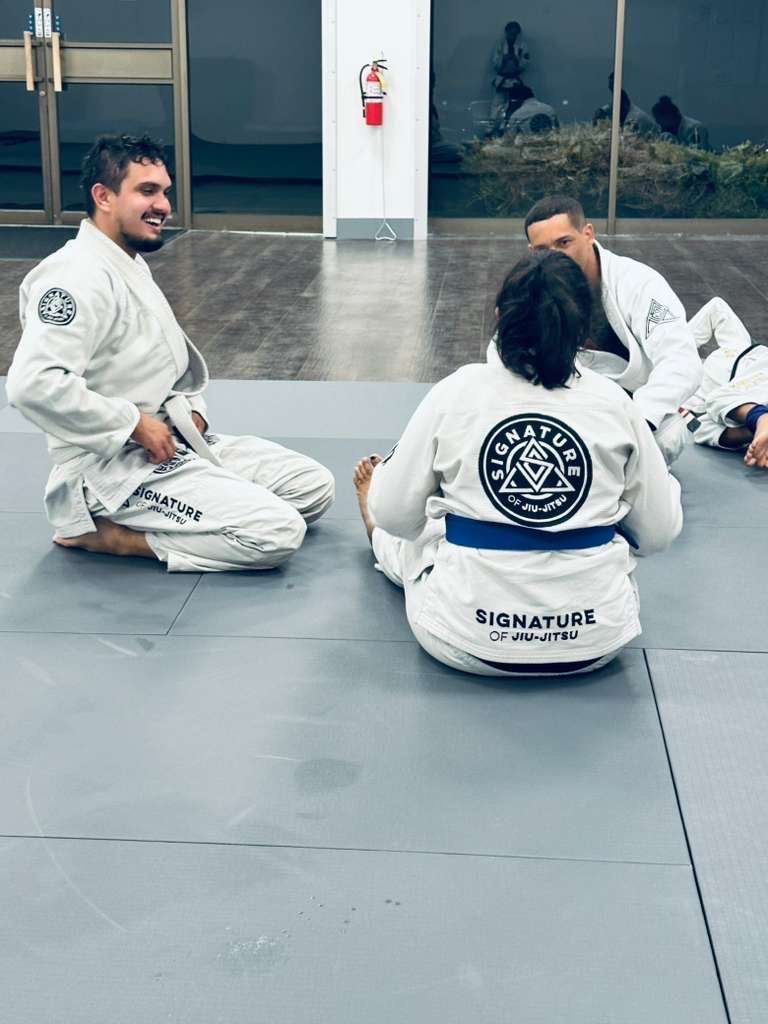
Jiu-Jitsu is where Belmont athletes learn to stay calm, keep thinking, and improve on purpose even when things get messy.
If you train long enough, you start to notice something: the biggest changes from Jiu-Jitsu are not always physical. Yes, you get stronger, fitter, and more coordinated. But what really sticks is the mindset you practice every time you slap hands, reset, and try again.
In Belmont, life moves fast. School, work, traffic up and down the Peninsula, practices, games, and family schedules can fill a calendar before you even realize it. Our job is to make training a place where you can breathe, focus, and build real skills without needing to be “tough” in a performative way.
This article breaks down the top mindset hacks we see athletes develop through training, and how those habits show up off the mats in sports, school, and everyday stress. We will also walk you through what a first Brazilian Jiu-Jitsu class in Belmont tends to feel like, how to start safely, and what progress usually looks like in the first 30 to 90 days.
Why Jiu-Jitsu Builds Mindset Faster Than Most Sports
Most sports give you a break between plays. Jiu-Jitsu is different. Once a round starts, you are in a live, changing problem where your opponent is actively trying to shut down your plan. That pressure is exactly what makes the mindset training so practical.
We coach you to make good decisions while your heart rate is up, your muscles are tired, and your last attempt did not work. That is not just “mental toughness.” It is a skill: staying present, noticing details, and choosing the next best action.
Another reason Jiu-Jitsu works for so many people in Belmont is that leverage and timing matter more than raw strength. When technique wins, you are rewarded for staying curious and precise, not for muscling through everything. That creates a learning culture that fits beginners, student athletes, and adults who have not competed in years.
Mindset Hack 1: Learn to Recover Fast After a Bad Moment
In training, you will get swept. You will get pinned. You will tap. The win is not avoiding those moments forever. The win is how quickly you reset.
We teach you to treat each bad position like a checkpoint, not a verdict. When you are mounted, for example, you do not need to “escape the whole thing” instantly. You need posture, frames, breathing, and a sequence. That habit builds emotional control you can use anywhere.
For Belmont athletes, this recovery skill transfers cleanly into games and tryouts. A mistake stops being a spiral. It becomes information. You learn to take the next rep with a clearer head.
Mindset Hack 2: Patience With Slow Progress (And Why It Works)
Nobody likes being new at something. Jiu-Jitsu makes that unavoidable, which is honestly part of the magic. The early phase can feel like learning a new language while someone is erasing the whiteboard every 30 seconds.
Our coaching keeps your goals realistic and measurable. Instead of chasing flashy submissions right away, we build fundamentals: base, posture, escapes, and positional awareness. Those are not glamorous, but they create momentum.
Here is the mindset shift we want you to internalize: progress is not linear, and it is still progress. One week you will feel sharp. The next week you will feel like you forgot everything. That does not mean you are back at zero. It means your standards just improved.
Mindset Hack 3: Small Wins Beat Big Inspiration
Belmont is full of high performers, and that can create a weird expectation that you should improve quickly if you “try hard enough.” In Brazilian Jiu-Jitsu in Belmont, the athletes who last are not always the most intense. They are the most consistent.
We help you track small wins that actually matter:
- Surviving 10 seconds longer in a tough position without panicking
- Remembering to breathe and frame instead of bench pressing someone off you
- Hitting a clean technical stand up without rushing
- Recognizing a guard pass attempt early and stopping it before it starts
- Asking a good question after class and drilling the answer next session
When you stack small wins, your confidence becomes sturdy. It is not based on a highlight moment. It is based on proof you earned over time.
Mindset Hack 4: Real-Time Problem Solving Under Pressure
A big part of Jiu-Jitsu is pattern recognition. You learn what grips usually lead to what takedowns, what pressure usually signals a pass, and what movement usually opens an escape. Over time, your brain starts building a library of “if this, then that” options.
We design classes so you do not just memorize techniques. You learn the reason behind them. If your first plan fails, you are not stuck. You have a second and third route.
This matters outside the academy, too. The same skill shows up when you are dealing with a heavy course load, a demanding job, or a stressful conversation. You get better at pausing, collecting information, and choosing an effective next step instead of reacting emotionally.
Mindset Hack 5: Comfort With Failure as Feedback
In many environments, failure feels like something to hide. On the mat, it is something to study. When you tap, you get immediate feedback. Your timing was late. Your base was off. Your grip choice gave away your intention. Great, now we know what to fix.
We keep sparring controlled and purposeful so you can actually learn from these moments. If every round is chaos, you only learn how to survive chaos. But if training is structured, you can test a specific escape, a specific guard retention concept, or a specific pass, and then refine it.
That is why we care about deliberate practice, not just logging hours. Repetition is powerful when it is tied to correction.
Mindset Hack 6: Beginner’s Mind, Even When You Get Better
One of the healthiest things we see in long-term students is the willingness to keep learning. The better you get, the more you realize how deep the art is. That is not discouraging. It is freeing.
We encourage questions and curiosity at every level. If you are an athlete who is used to being “good” quickly, this can be a reset. You do not have to protect an identity. You can be a learner again.
In a Brazilian Jiu-Jitsu class in Belmont, this mindset shows up in small ways: drilling patiently, listening to details, and staying coachable even after a strong round. Over time, that habit changes how you approach improvement everywhere.
What a First Brazilian Jiu-Jitsu Class in Belmont Usually Looks Like
Most beginners worry about two things: getting hurt and looking clueless. We get it. Our goal is to make your first class feel structured, safe, and surprisingly welcoming.
A typical first session includes:
1. A quick orientation so you know where to stand, how to move safely, and how to tap
2. A warm up focused on mobility and basic movement, not punishment
3. Technique instruction with clear steps and a partner who helps you learn
4. Drilling at a controlled pace so you can repeat the movement and ask questions
5. Optional light sparring depending on readiness, or positional training with guidance
6. A short reset at the end so you leave with a specific “next focus” for your return
You do not need to be in shape to start. You start to get in shape because you start. If you have old injuries or you are coming from another sport season, we can help you scale intensity and choose smart training partners.
How Often Should Belmont Athletes Train for Mindset and Skill?
Consistency beats extremes. Most people do best starting with two to three sessions per week. That is enough frequency to remember what you learned last time, build conditioning gradually, and improve without feeling like training is taking over your life.
If you are balancing school sports, we usually recommend keeping Jiu-Jitsu sessions controlled during heavy competition weeks. Skill grows when you can learn calmly, not when every round turns into a war. You will still work hard, but the priority stays on clean reps and steady recovery.
If your schedule is tight, the class schedule page on the website is your best friend. The easier it is to show up, the more likely you are to keep showing up, and that is where the mindset change really happens.
What to Wear and How to Prepare Mentally
For your first class, comfort matters. If you are training in the gi, we will guide you on sizing and what to bring. If you are starting in no gi, athletic wear is fine as long as it is safe for training.
A few practical basics help a lot:
- Arrive a little early so you can settle in and ask questions
- Trim nails and remove jewelry for safety
- Show up with one simple goal, like learning how to tap and breathe under pressure
- Expect to feel awkward at first, because everybody does
- Leave space to be a beginner without judging yourself for it
The mindset win here is subtle: you are practicing humility and persistence at the same time. That combination is rare, and it transfers.
What Results to Expect in the First 30 to 90 Days
We like clear expectations because they keep you motivated. In the first month, most students notice improved body awareness, better conditioning, and a growing ability to stay calm in unfamiliar positions. You will also start to recognize basic patterns like guard, side control, mount, and back control.
By 60 to 90 days, you can usually expect to have a few dependable escapes, one or two simple submissions you understand, and a better sense of timing and balance. Just as important, your mindset starts to shift: you stop needing every round to feel like a win. You begin to measure progress by decision making, composure, and problem solving.
That is the deeper benefit of Brazilian Jiu-Jitsu in Belmont. You are building a calmer, more durable version of your athletic self.
Take the Next Step
If you want mindset training that shows up in your grades, your sport, and your confidence under pressure, we would love to help you build it on the mats. Our coaching keeps Jiu-Jitsu structured, beginner friendly, and focused on steady improvement, not ego.
At Signature of Jiu-Jitsu, we built our Belmont programs around fundamentals, deliberate practice, and a training culture where you can work hard while still learning well. When you are ready, your first step is simple: come in, train once, and see how it feels.
Turn what you learned here into hands-on training by joining a Jiu-Jitsu class at Signature of Jiu-Jitsu.