Jiu-Jitsu is one of the few workouts that can leave you tired in the best way and still give you more energy for everything after class.
If you live and work in Belmont, you already know the rhythm: busy mornings, screen-heavy days, long meetings, and the constant sense that your body wants movement while your brain wants a reset. We built our Jiu-Jitsu program for that exact reality, because fitness is only useful if it translates into real life: more energy at 3 pm, fewer aches when you stand up, and more calm when stress shows up.
What surprises many new students is how quickly Brazilian Jiu-Jitsu in Belmont becomes more than “a class.” It turns into a practice for resilience. You learn to solve problems while breathing hard, stay steady when you feel stuck, and keep moving forward without needing to muscle through everything.
Our goal is straightforward: give you a training experience that makes you feel better outside the gym, not just “worked.” That means practical technique, thoughtful coaching, and a pace that supports beginners while still challenging experienced grapplers.
Why everyday energy is not just about cardio
A lot of fitness programs chase intensity, but intensity alone does not always create usable energy. Everyday energy is the combination of stamina, mobility, and nervous system balance. In Jiu-Jitsu, you build all three in a way that is surprisingly sustainable because we rely on leverage, timing, and positioning instead of repeated high-impact pounding.
You can think of training as a series of short problem-solving rounds. Your heart rate rises, you recover, you adapt, and you repeat. That rhythm matters. Over time, your body gets better at shifting from stress to calm, which is a big reason many adults report better sleep and a steadier mood once training becomes consistent.
Belmont has plenty of driven professionals, and burnout is not rare. Our classes give you a place to be fully present for an hour, because you cannot half-focus when someone is trying to control your posture. That forced focus is a gift. You leave class mentally cleaner, like you closed a bunch of open browser tabs in your head.
How Jiu-Jitsu builds resilience you can actually use
Resilience is not just “toughness.” In Brazilian Jiu-Jitsu, resilience means staying thoughtful under pressure, making good decisions when your body wants to panic, and finding a path forward even when the situation is not ideal.
We train these skills in a controlled setting, with partners and coaches who keep the room safe and productive. The result is a kind of confidence that is earned. It is not loud. It is quiet, practical, and reliable.
Physical resilience: strength that protects your joints
Jiu-Jitsu teaches you how to align your body. When you learn to frame, bridge, hip escape, and hold balance, you are training strength in positions that protect your spine, shoulders, and knees. You also learn when to stop pushing and start repositioning, which is an underrated life skill.
Because technique matters more than raw power, smaller students learn how to stay safe against larger partners. That is not marketing language. It is built into the art. The best movements often look simple, but they save energy and reduce strain.
Mental resilience: staying calm when you are uncomfortable
A big part of training is learning to breathe through discomfort. You might be pinned. You might be tired. You might not know the answer yet. Instead of quitting mentally, you learn to create small wins: improve your position, recover your guard, find a grip, stand up safely.
This is also why Adult Jiu-Jitsu in Belmont has grown so quickly nationwide in the last few years. Post-pandemic, people are looking for stress relief that feels real, not forced. Industry trends from 2024 to 2026 show a strong surge in adult enrollment tied to functional fitness and mental resilience, and we see that reflected in our community every week.
What training looks like here: structured, friendly, and real
We run classes in both Gi and No-Gi, and that variety is not just for sport. It keeps your learning flexible. It also makes your body adaptable, because the tempo and grips change depending on what you are wearing.
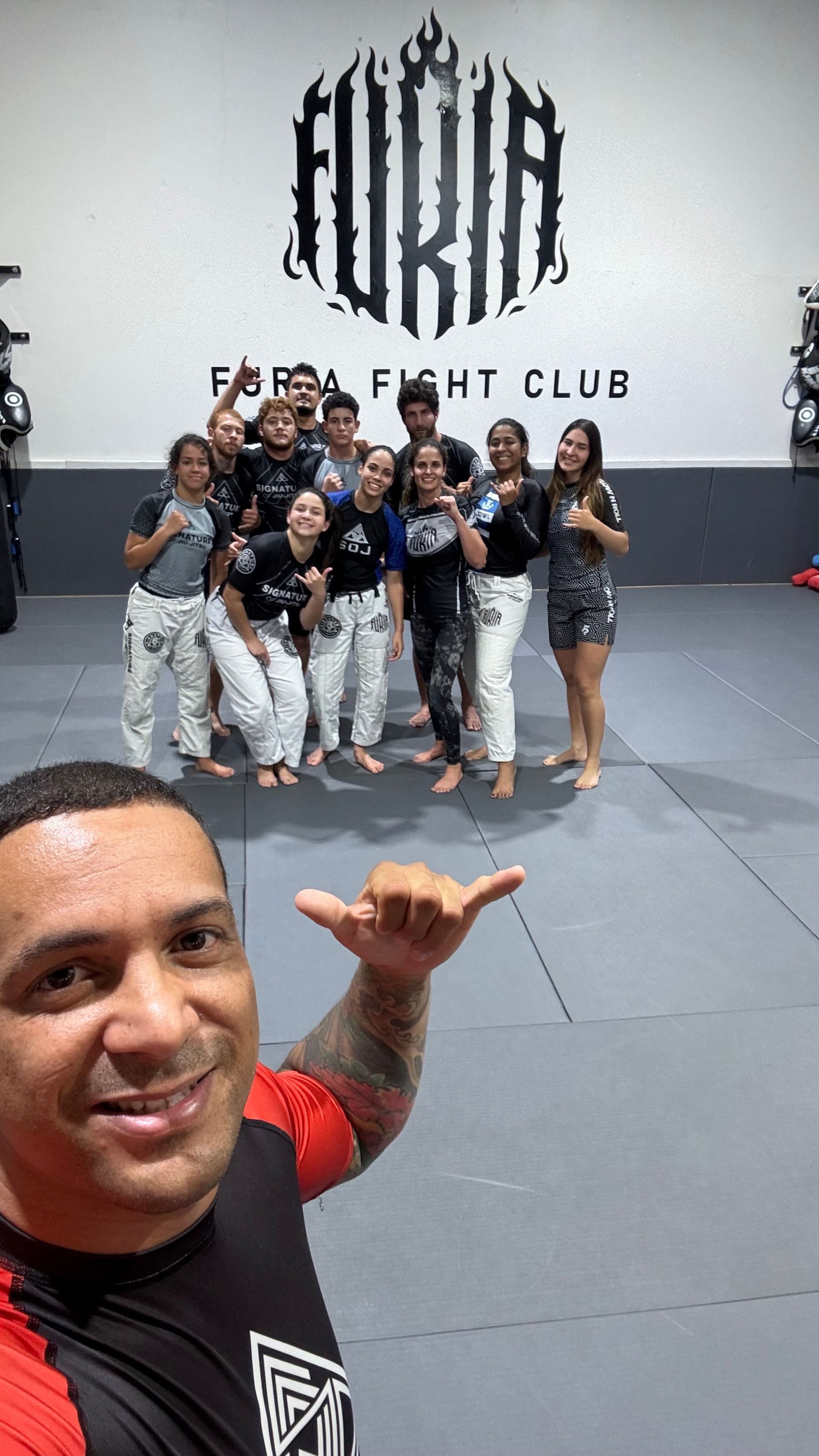
Our space at 915 Ralston Ave is bright, with big windows and natural light. That detail sounds small until you train in it. The room feels awake, even on a foggy Bay Area evening. We keep the atmosphere supportive and family-friendly, with coaching that is focused and respectful. You will work hard, but you will not be thrown into chaos.
We also keep our class schedule practical for real life. We know many students are commuting, parenting, or squeezing training between deadlines. Daily classes help you build consistency without needing a perfect routine.
Gi vs No-Gi: which one helps with energy and resilience?
Both do, just differently.
Gi training slows things down and teaches you to control distance, posture, and grips. You learn patience and precision, and you build the kind of strength that shows up in your hands, forearms, and core.
No-Gi training is faster and more movement-heavy. You learn to scramble, manage slippery positions, and stay balanced without relying on fabric grips.
If your goal is everyday energy, the best approach is simple: train both when you can. The mix keeps your body learning and your mind engaged, which is exactly what most adults need after a repetitive workday.
The beginner path: how you build confidence without getting overwhelmed
A common worry is, “Do I need to be in shape first?” No. We help you get in shape by training, and we coach you through the early phase where everything feels new.
Beginners usually notice three changes first:
- Your breathing improves because you learn how to relax while working
- Your posture and core strength improve because you are constantly managing frames and balance
- Your confidence rises because you can feel skill replacing uncertainty
We take safety seriously. Tapping is normal. Asking questions is normal. Taking a round off is normal. Consistency matters more than bravado, and we would rather you train for years than try to “win” your first week.
What you will practice in early classes
Here is what most new students start building right away:
- Movement fundamentals like hip escapes, bridging, and technical stand-ups that protect you and conserve energy
- Positional awareness so you understand where you are and what to fix first
- Simple submissions and escapes that prioritize control and safety
- Partner drills that create muscle memory without beating up your body
- Light live rounds where you apply skills with guidance and clear expectations
That structure is a big part of why our room stays welcoming for everyone from true beginners to experienced grapplers.
Self-defense benefits that translate to real situations
We teach techniques that work when the other person is bigger and stronger, because leverage and positioning are the point. You learn how to control distance, break grips, get back to your feet, and protect yourself when things get close.
For women especially, participation in BJJ has grown dramatically in recent years, and the reasons are practical: boundary-setting, physical confidence, and skills that do not depend on size. We see that same motivation here in Belmont. People want competence, not hype.
Self-defense is also emotional regulation. When you have practiced escaping pressure hundreds of times, your body reacts differently to stress in general. You walk with more awareness. You make clearer decisions. You feel less rattled by small confrontations.
The “tech worker” benefit: focus, neuroplasticity, and a better kind of tired
Belmont sits in the middle of a high-performance culture. A lot of our students spend their days solving abstract problems, then wonder why they feel drained but restless. Jiu-Jitsu helps because it is physical problem-solving with immediate feedback. You try something, it works or it does not, and you adjust.
This is where the neurological side matters. Skill learning drives neuroplasticity. When you drill a sequence, your brain is wiring patterns under mild stress, then refining them through repetition. That is a healthy challenge, and it often carries over into sharper focus at work, especially when training becomes a consistent habit.
Many practitioners also report higher daily energy levels over time because sleep improves and the body moves better. When your hips loosen up, your breathing becomes more efficient, and your baseline tension drops, you stop wasting energy on stiffness.
And yes, you will get tired. But it is a satisfying tired, the kind that makes dinner taste better and screens feel less magnetic.
How membership and scheduling fit real Belmont life
We keep entry simple. You can start with a free trial class to see how the room feels and whether the training style matches your goals. From there, students typically choose an option that supports consistency, because the biggest benefits of Jiu-Jitsu show up when you train regularly.
Our memberships are designed around access and flexibility, and our schedule runs seven days a week so you can train mornings, evenings, or on weekends. If you travel or have unpredictable weeks, we help you stay connected to a routine instead of falling off completely.
If you are juggling family logistics, our environment is built to be inclusive and supportive. We train kids, adults, and whole families, and that shared routine can be a powerful way to build resilience at home, too.
A simple way to measure progress without obsessing over it
Progress in Jiu-Jitsu is not linear. Some weeks you feel unstoppable, and other weeks you feel like you forgot everything. That is normal. The win is showing up and stacking small improvements.
We recommend tracking a few practical markers:
1. Your recovery: how quickly your breathing returns after rounds
2. Your posture: how often you can keep alignment under pressure
3. Your decision-making: whether you can choose a calm option instead of rushing
4. Your mobility: how your hips, back, and shoulders feel day to day
5. Your consistency: how regularly you train across a month
When these improve, your everyday energy improves too, and you will notice it in places you did not expect, like commuting, parenting, or presenting in a meeting without feeling fried.
Take the Next Step
If you want training that builds real-world fitness, steady confidence, and the ability to stay calm under pressure, we designed our programs to deliver that without needing you to be “a certain type of athlete” first. You will learn Brazilian Jiu-Jitsu in Belmont through progressive coaching, practical drilling, and rounds that teach you to solve problems with technique instead of force.
We keep the atmosphere welcoming, the instruction detailed, and the schedule realistic for busy lives. When you are ready to see how this feels in person, we would love to have you train with us at Signature of Jiu-Jitsu.
See what makes training at Signature of Jiu-Jitsu special by joining a Jiu-Jitsu class today.